
Last updated November 2, 2026
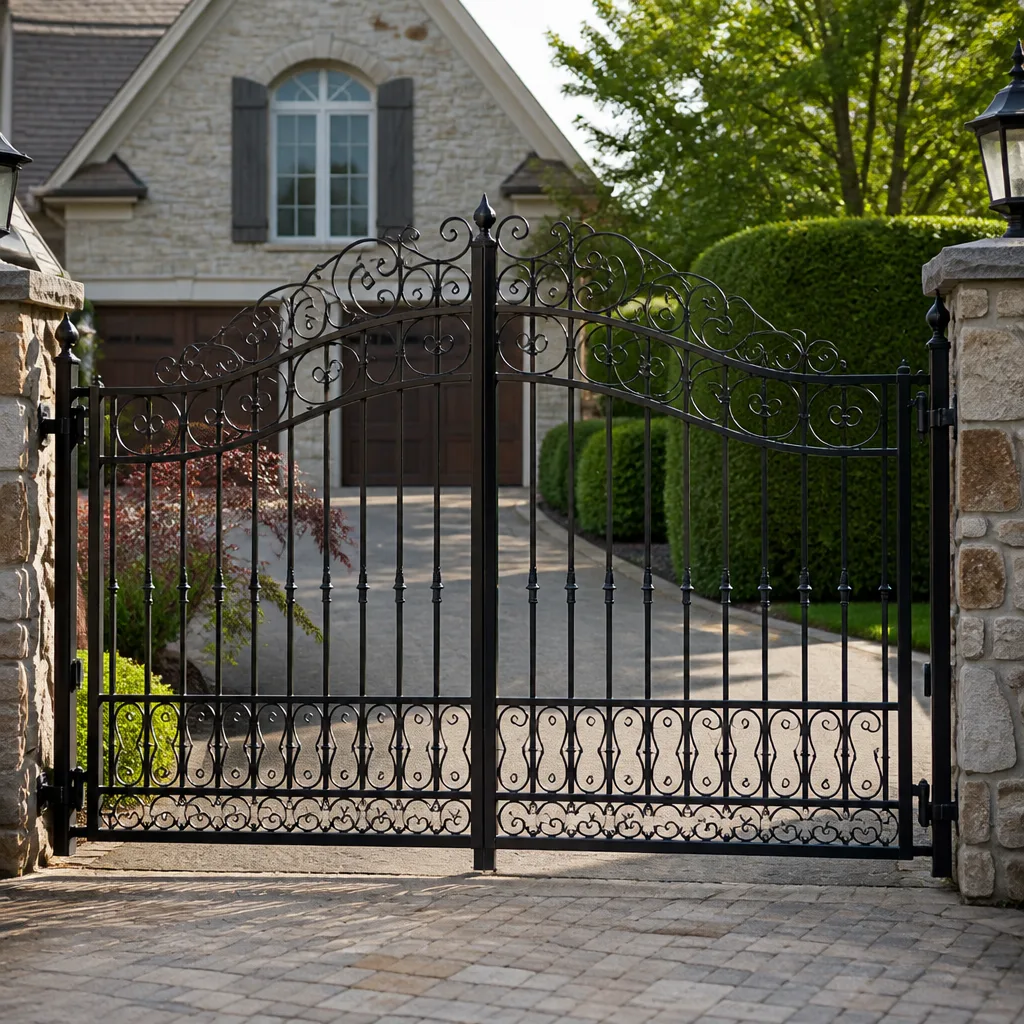 Wrought iron
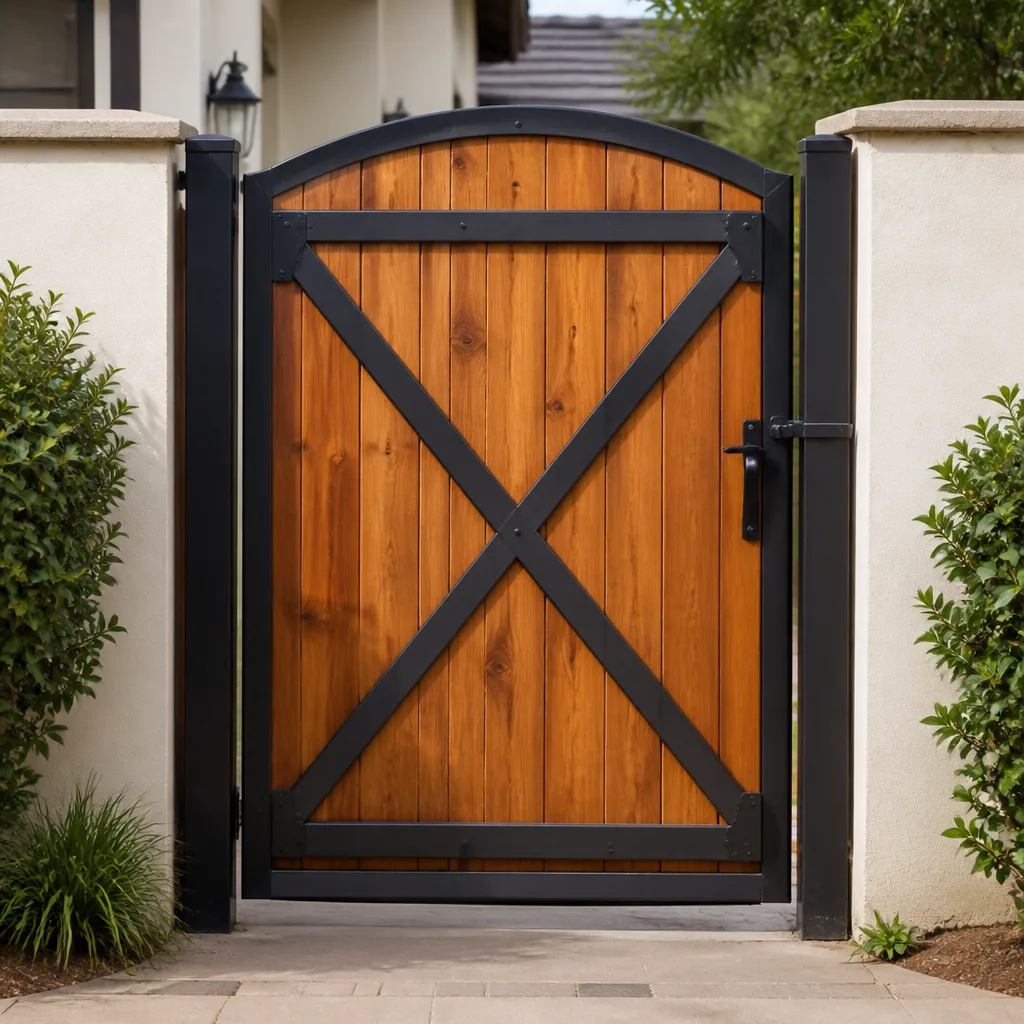 Wood & steel frame
 Farm & ranch
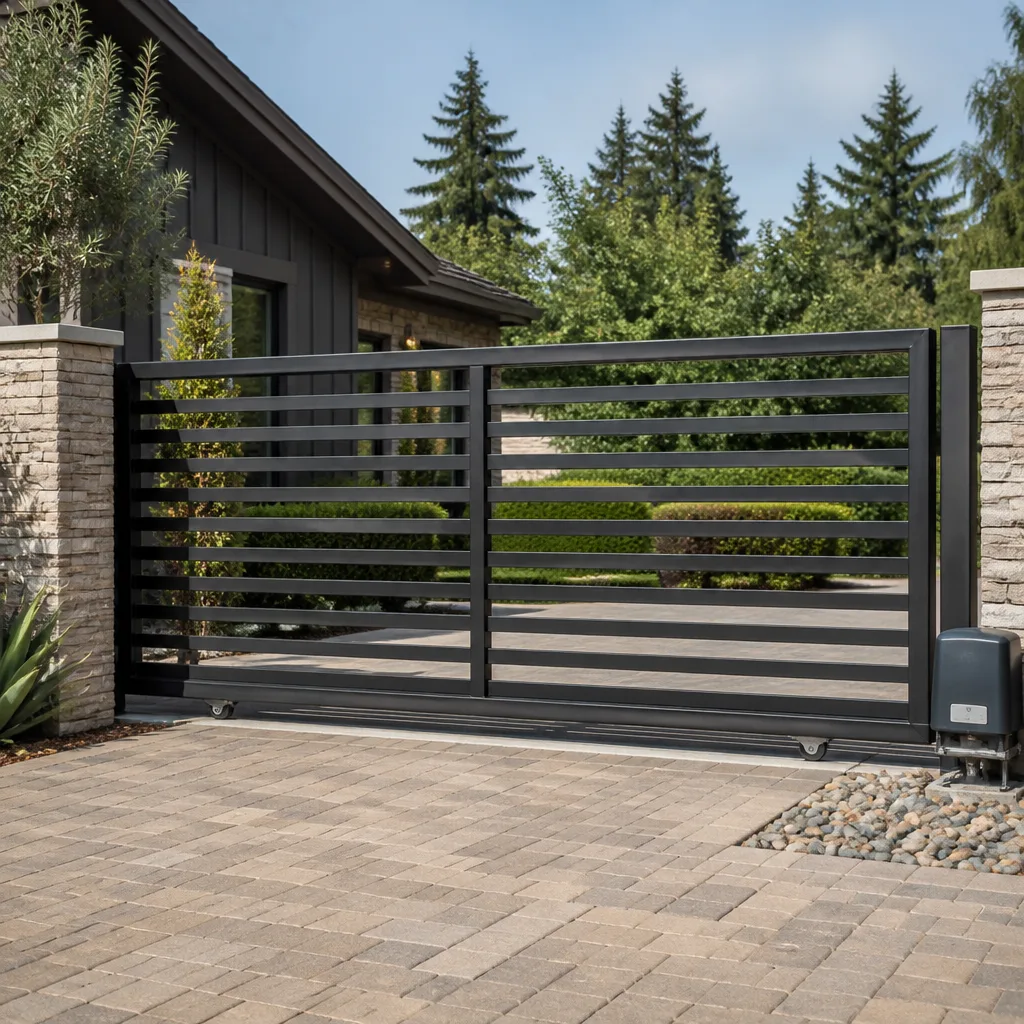 Sliding driveway gates
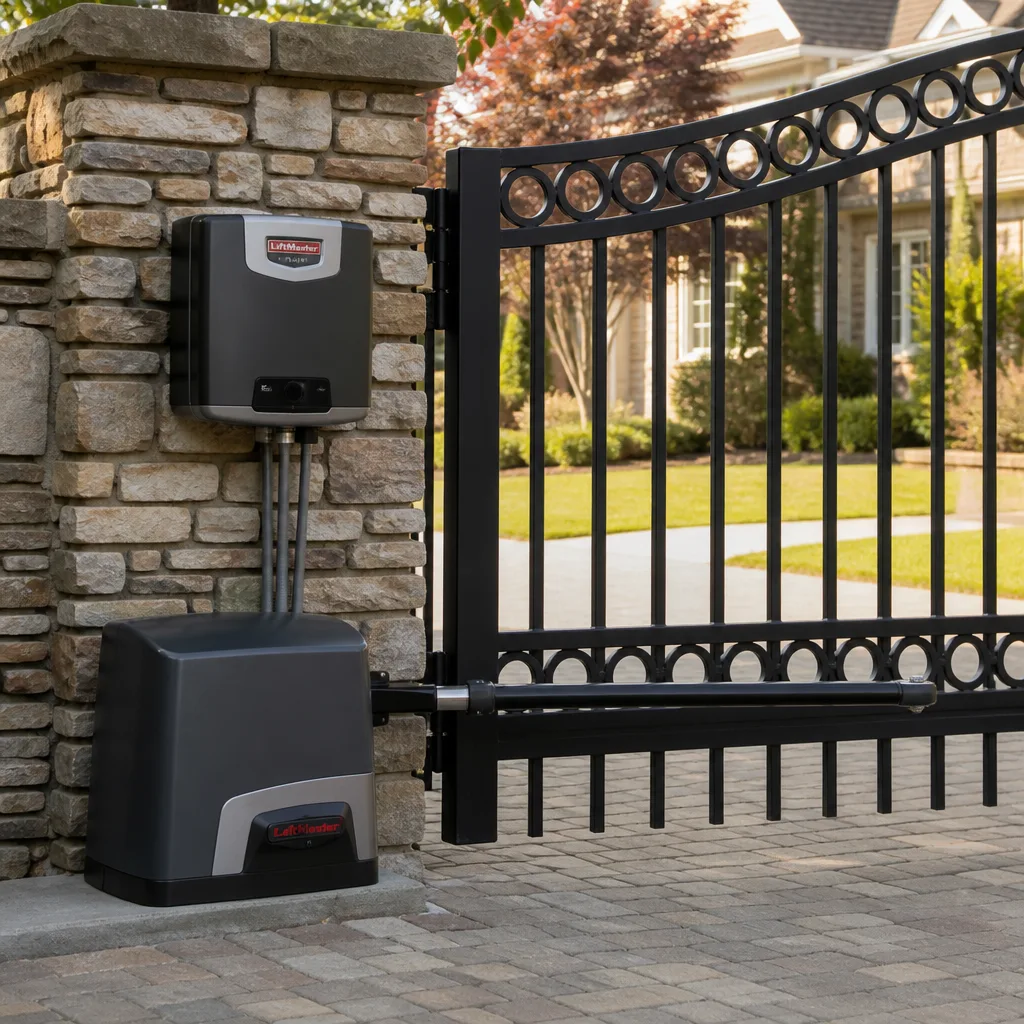 LiftMaster operators
Free on-site gate assessment - hinges, posts, and your LiftMaster or Nice gate operator checked before anything is quoted
The assessment is free and the quote is the invoice.
Get your free estimateGate Repair Permits, Codes & Inspections in CA: What You Need to Know
Here’s the uncomfortable truth most California homeowners don’t hear until something goes wrong: UL 325 entrapment protection compliance isn’t a suggestion, and a significant percentage of residential automated gates installed before 2010 don’t meet current standards. The moment someone gets pinned by a closing gate, that gap becomes your liability, not the original installer’s, not the home inspector’s, not the city’s. In San Carlos, where hillside driveways and tight property lines make sliding and swing gates the norm rather than the exception, the odds of non-compliant hardware sitting at the end of your driveway are higher than you’d think. This guide walks through exactly when permits are required, what code compliance actually involves under California law, and how to check whether your existing gate would pass an inspection today – before a problem forces you to find out.
Styles & brands we work with
- Wrought iron
- Wood & steel frame
- Farm & ranch
- Sliding driveway gates
- LiftMaster operators
Quick Answer
Most gate repairs – replacing a broken hinge, swapping a failed circuit board, rewiring a keypad – don’t require a permit in San Carlos or anywhere else in San Mateo County. What does trigger a permit is replacing the gate operator, adding new access control, or installing a new gate from scratch, because that work falls under California’s adoption of UL 325, which governs automated gate entrapment protection. If the gate was installed before 2010 and hasn’t been updated with photo eyes, edge sensors, and current-force auto-reverse calibration, it’s likely out of compliance, and bringing it current is a mechanical job, not a paperwork drill.
Table of Contents
- UL 325 Compliance: The Law Behind Gate Safety in California
- When San Carlos Requires a Permit for Gate Work (and When It Doesn’t)
- Entrapment Protection: What a Code-Compliant Gate Actually Has
- How to Pull a Permit History on Your San Carlos Property
- Bringing an Older Gate Up to Code: What’s Involved
- HOA Gate Rules in San Carlos: When They’re Stricter Than the City
- Operator Replacement and the Permit Question
- New Gate Installation: The Full Compliance Path
- Common Mistakes to Avoid
- When to Call a Professional
- Frequently Asked Questions
- The Bottom Line
UL 325 Compliance: The Law Behind Gate Safety in California
UL 325 is a safety standard written by Underwriters Laboratories that governs automated gate operators and access-control devices. California adopted it into law through Title 19 and Title 24, which means it’s not optional, not a HOA preference, and not something a contractor can waive. The standard exists because automated gates are strong enough to injure or kill, and the failure modes are predictable: a child slipped through the gap while the gate was moving, a delivery driver pinned against a post, a car caught mid-cycle. The standard’s job is to make sure the gate detects obstruction and reverses before anyone gets hurt.
There’s a common misconception we run into in San Carlos that UL 325 only applies to commercial gates, or only to gates installed after a certain date. (See Gate Repair Warning Signs: A San Carlos Homeowner’s Reference Guide for related red flags.) Neither is true. The standard applies to every automated gate, residential and commercial, and it applies to existing installations, not just new ones. When a gate operator is replaced, the entire system has to be brought into compliance with the current version of UL 325, not the version that was in effect when the original gate went in. That’s where a lot of homeowners get blindsided: they budget for a $900 operator swap and learn that the full compliance update, what regulators call bringing the gate “up to code,” runs closer to $2,500 because the old gate never had photo eyes or a safety edge on the closing edge.
For property owners, compliance isn’t about avoiding a fine. It’s about liability. If someone is injured by a non-compliant gate, the property owner’s insurance company will ask one question first: was the gate UL 325 compliant at the time of the incident? If the answer is no, the claim becomes a legal exposure that follows the property, not the contractor who installed it twenty years ago. In our experience working on gate systems across San Carlos gate repair calls, this is the single most misunderstood aspect of gate ownership, because the gate works fine, day in and day out, until the one day it doesn’t.
When San Carlos Requires a Permit for Gate Work (and When It Doesn’t)
The permit threshold in San Carlos follows San Mateo County building codes, and it’s more specific than most people expect. Here’s the actual line:
- No permit required: Replacing a gate hinge, roller, wheel, or track. Swapping a circuit board, limit switch, or capacitor inside an existing operator. Rewiring an existing keypad or intercom. Replacing a damaged gate leaf with an identical one. Replacing safety sensors with equivalent models. Essentially, repairs that restore the gate to its original function without changing the operator, the layout, or the access-control system.
- Permit required: Installing a new gate operator, whether it’s a swing arm, slide driver, or underground unit. Adding access control that ties into the gate operator (a new telephone entry system, card reader, or vehicle loop detector). Installing a new gate from scratch, including posts, footings, and electrical service. Converting a manual gate to automated. Relocating an existing gate or changing its swing direction. Running new electrical conduit or adding a dedicated circuit for gate power.
Why the distinction? Because the permit triggers an inspection, and the inspection verifies two things: the electrical work meets California Electrical Code, and the operator’s entrapment protection meets UL 325. A repair that doesn’t touch the operator or the electrical system doesn’t create new code liability, so there’s nothing to inspect. A repair that does – which is most electric gate repair work on automation components – sits in a gray zone. Technically, swapping a failed circuit board is a “repair,” not a new installation, and most building departments won’t require a permit for it. But if the original operator was installed before 2010 and no one ever added the current generation of safety devices, that “repair” can turn into a compliance conversation fast, because a technician who touches the control system without flagging the missing entrapment protection is signing off on a known non-compliant system.
Entrapment Protection: What a Code-Compliant Gate Actually Has
UL 325’s entrapment protection requirements break down into two categories based on what could go wrong: injuries to people and damage to vehicles. A code-compliant gate in San Carlos will have four specific safety layers, and if yours is missing any of them, it’s out of compliance regardless of when it was installed.
- Photo eyes (also called photoelectric sensors or safety beams): These are the two small boxes mounted on opposite sides of the gate opening, typically 6 to 12 inches off the ground. They project an invisible beam across the opening. If anything breaks the beam while the gate is closing, the gate reverses. UL 325 requires them on every automated gate installed since 2001. Gates installed before that often don’t have them at all, or have them mounted at the wrong height.
- Edge sensors (also called contact edges or reversing edges): These are rubber strips with internal pressure sensors mounted along the leading edge of the gate leaf, on the bottom rail of a slide gate, or on the hinge-side gap of a swing gate. When the gate presses against something, the sensor triggers and reverses the gate. They’re the last line of defense when a photo eye is blocked, damaged, or bypassed, and they’re mandatory on the closing edges of both swing and slide gates.
- Loop detectors: These are wire loops buried in the driveway, typically 3 to 5 feet back from the gate’s travel path. They detect the metal mass of a vehicle and hold the gate open, or prevent it from closing, while a car is in the path. Most San Carlos homes with automated gates have at least a free-exit loop on the inside; fewer have a safety loop on the outside, which is the one that prevents the gate from closing on a car waiting to enter.
- Auto-reverse calibration (also called force sensing or current sensing): The operator must be calibrated to reverse when it encounters resistance above a certain threshold, measured in force or current draw. Every operator manufacturer – BFT, Linear, Viking, Ghost Controls – has its own calibration procedure, and it must be re-done after any mechanical work, any change to gate weight, or any seasonal temperature shift that affects hinge friction. A properly calibrated gate reverses on contact with a child but doesn’t false-trigger on wind gusts. An improperly calibrated one does the opposite.
The missing piece in most pre-2010 San Carlos installations is the combination of photo eyes and edge sensors working together. Many older gates had one or the other, or had edge sensors that were never wired into the operator’s entrapment input, or had photo eyes that were mounted at 3 feet instead of the current code height of under 2 feet, which UL 325 revised after a series of crawl-under entrapment incidents. Compliance isn’t a checkbox; it’s a system, and every component has to be present and communicating with the operator’s control board.
How to Pull a Permit History on Your San Carlos Property
Before you call anyone about a gate issue, it’s worth knowing what the city already has on file for your property. San Mateo County and the City of San Carlos maintain permit records going back decades, and pulling them is straightforward if you know where to look. The building department’s records will show every permit pulled on your address: electrical, plumbing, structural, and yes, any gate-related work that went through proper channels.
- Start online. The City of San Carlos Building Division has an online permit search portal through the county’s Accela system. Enter your address and you’ll see a list of permits, their status, and whether they were finaled (signed off by an inspector) or left open. An open permit from 2004 that no one ever called for final inspection is a common find, and it’s a red flag for any current work that touches the same systems.
- Request records in person. If the online portal doesn’t go back far enough, the Building Division at City Hall can pull microfiche and paper records. There’s usually a records request form and a small fee. Ask specifically for anything related to “gate,” “fence,” “electrical – gate operator,” or by the name of the contractor who built the house, since gate work is often bundled into original construction permits.
- Check for the final inspection sign-off. A permit that was pulled but never finaled means the work was never verified as code-compliant. In San Carlos, where much of the housing stock dates from the 1940s through the 1970s, a surprising number of gates were converted from manual to automated in the 1990s and early 2000s under permits that were opened, worked on, and then abandoned when the contractor or homeowner lost track of the final inspection step.
- Cross-reference with your title report. If you bought the property recently, your title report may include permit disclosures. An open permit is a title defect in California, which means it should have been disclosed at closing. If it wasn’t, you may have recourse with the title company, though that’s a separate legal conversation.
Having this history in hand changes the conversation with any gate contractor. Instead of guessing whether your gate was ever inspected, you’ll know, and you can plan the compliance work accordingly.
Bringing an Older Gate Up to Code: What’s Involved
Mechanically, bringing a pre-2010 automated gate into current UL 325 compliance is a defined scope of work, not a vague overhaul. In San Carlos, where many lots are compact and the gates are swing-type or slide-type on sloping driveways, the list usually looks like this:
- Install or reposition photo eyes at the correct height (under 24 inches for pedestrian detection, with a second pair at vehicle height where the gate operator’s manual calls for it) and wire them into the operator’s entrapment input terminals, not just into a power source that makes them look active.
- Mount edge sensors on the closing edge of each gate leaf, wired so that compression triggers an immediate reverse. On slide gates this means the leading edge profile; on swing gates, both the leading edge and the hinge-side pinch point where fingers get caught.
- Add or repair loop detectors in the driveway, with a free-exit loop inside and a safety loop outside where the driveway meets the street. This is trenching and saw-cutting work, not a surface-mount job, and it’s the part of the project that accounts for most of the cost variance.
- Re-calibrate the operator’s force sensing to the current gate weight and travel speed. This isn’t a one-time setting; it’s a procedure that has to be redone after spring tension changes, hinge lubrication, or any mechanical adjustment.
- Verify the operator’s fail-safe mode. If the gate loses power, does it stay locked, free-swing, or default to manual? UL 325 and local fire code both have requirements around emergency egress, and a gate that locks shut during a power outage on a hillside street with one access point can be a fire-department access problem as well as a code violation.
The cost in San Carlos typically falls between $1,800 and $3,500 depending on how many of these components are missing, whether loop detectors require new trenching, and whether the existing operator’s control board even has terminals for the additional sensors. Some older operators, particularly first-generation slide gate drivers, don’t have enough entrapment inputs to support both photo eyes and edge sensors, which pushes the project into operator replacement territory. That’s the point where a new gate installation conversation becomes relevant, because the operator and the safety system have to be replaced together.
HOA Gate Rules in San Carlos: When They’re Stricter Than the City
San Carlos has a patchwork of planned communities and hillside subdivisions with active HOAs, and several of them have architectural guidelines that govern gates more tightly than the city does. The city cares about safety and electrical code. The HOA cares about appearance, uniformity, and sometimes gate type – and the two sets of rules occasionally point in different directions.
A common scenario: the city’s code says the gate has to have a photo eye at pedestrian height, but the HOA’s design standards say all gate hardware must be concealed behind a masonry column, which the standard photo-eye housing doesn’t fit. Or the HOA specifies a particular gate style that conflicts with the reversing edge profile required by UL 325. When municipal code and HOA rules conflict, the city’s safety requirements win, but the HOA can still make the compliance work visually difficult, which adds cost.
There’s also the question of who owns the gate. In some San Carlos HOA communities, the gate at the community entrance is HOA property, but the gate at your individual driveway is yours. In others, both are HOA property, and the HOA has to sign off on any operator change, which means your gate repair timeline depends on the HOA board’s meeting schedule. Before starting any gate work in a planned community, pull your CC&Rs and check the architectural review section. The city’s permit portal won’t tell you about HOA approval, and neither will a contractor who doesn’t know the neighborhood. If the HOA requires pre-approval and you skip it, you can be forced to reverse the work at your own expense, even if it passed city inspection.
Operator Replacement and the Permit Question
Here’s the specific scenario that trips up more San Carlos homeowners than any other: the gate operator fails, they call a generalist contractor or a handyman, the handyman swaps in a new operator, and nobody mentions that a permit was required. (For step-by-step diagnostics, see our Gate Repair Troubleshooting: Common Problems and How to Fix Them.) The gate works. The invoice is paid. Three years later, the gate hits a car, the insurance adjuster asks about the operator, and there’s no permit on file because the work was never permitted. Now it’s an unpermitted installation, which in California is a separate liability issue from the accident itself.
Operator replacement is the single most common unpermitted gate job, and it’s almost always done without malice. The person doing the work simply doesn’t know the threshold. Replacing an operator involves new electrical wiring, a new control system, and new entrapment protection requirements, all of which fall under the permit requirement. The cost of the permit and inspection in San Carlos is typically under $400, a small fraction of the operator itself. The risk of skipping it is an unpermitted installation on the property’s record, which becomes a disclosure issue when you sell, and a coverage issue if the gate is ever involved in an incident.
We work on every operator brand that shows up in San Carlos driveways – BFT, Linear, Viking, Ghost Controls included – and the compliance path is the same regardless of brand: pull the permit, install the operator and safety devices, schedule the inspection, pass it, close the permit. The inspection itself is usually 20 minutes. It’s the paperwork discipline that matters, not the complexity of the work.
New Gate Installation: The Full Compliance Path
A new gate installation in San Carlos, whether it’s a manual gate going in for the first time or an automated system from the start, is the most permit-intensive scenario, because it touches multiple code domains at once. The full path looks like this:
- Site plan and design. The gate’s location, swing path, and setback from the property line and sidewalk have to be documented. San Carlos has specific setback requirements for gates on corner lots and gates that open outward toward the street, because the swing path can’t encroach on pedestrian right-of-way.
- Building permit application. Filed with the City of San Carlos Building Division, with the site plan, the gate specifications, and the operator’s UL 325 compliance documentation attached. Most major brands – BFT, Linear, Viking, Ghost Controls, LiftMaster, FAAC – publish UL 325 compliance sheets for each operator model, and the building department will ask for them.
- Electrical permit. A dedicated electrical permit covers the power run from the house or a new subpanel to the gate location. This is either conduit from the main panel or, increasingly, a solar-charged DC system that avoids the trenching entirely. San Carlos’s building code allows DC low-voltage operators without a full electrical permit in some configurations, but the gate still has to be inspected for UL 325 compliance.
- Rough inspection. Before the gate is hung, the inspector verifies the footings, the post depth, the conduit run, and the operator mounting pad. On hillside lots, this is also where retaining and drainage issues get flagged, because a gate post on the downslope side of a driveway has to be set deeper than the frost line and anchored against lateral pressure.
- Final inspection. The gate is hung, the operator installed and wired, all safety devices in place, and the system is tested in front of the inspector. The inspector will check photo-eye placement, edge-sensor function, auto-reverse calibration, and the manual release mechanism. The permit is finaled when everything passes.
The timeline from permit application to finalized inspection in San Carlos typically runs 3 to 6 weeks, depending on the city’s current inspection backlog. Skipping any step doesn’t save money in the long run; it just shifts the cost to a future disclosure, a future insurance claim, or a future buyer who walks away. Browse more guides & resources on gate compliance and local requirements.
Common Mistakes to Avoid
- Assuming a repair needs no permit because it’s “just a part replacement.” Replacing a circuit board in an operator that predates current safety standards often triggers a compliance review whether or not a permit is technically required. The safe move is to ask the question before the work starts, not after the gate is back in operation.
- Mounting photo eyes at the wrong height and calling it done. UL 325’s current height requirements exist because of specific entrapment incidents. A photo eye mounted at 36 inches is functionally useless for detecting a small child crawling underneath, which is the exact scenario the standard addresses.
- Calibrating the auto-reverse once and never again. Force sensing drifts. Temperature changes, hinge wear, and gate weight shifts all affect the calibration point. A gate that was perfectly calibrated in June can be dangerously stiff in December, especially in San Carlos’s wet winter season when wooden gates swell and metal hinges bind.
- Skipping HOA approval in a planned community. The city permit and the HOA approval are two separate processes, and passing one doesn’t satisfy the other. HOA enforcement can be slower than the city’s, but it’s also harder to reverse, because you can’t uninstall an HOA violation with a paperwork fix.
- Buying a house with an automated gate and assuming it’s compliant. Most lending inspections don’t evaluate gate safety, and home inspectors typically note the gate as “functional” without checking UL 325 compliance. Pull the permit history and inspect the physical safety devices before the closing, not after.
- Wiring a photo eye to power but not to the operator’s entrapment input. This is the most common shortcut we see. The photo eye’s little red light comes on, so everyone assumes it’s working. It’s not; it’s only detecting that it has power. It’s not connected to anything that will reverse the gate.
- Letting a generalist handle gate electrical work. Gate operators communicate with loop detectors, edge sensors, photo eyes, and access control through specific control-board inputs and protocols. A general electrician or handyman who doesn’t work on gates daily is likely to wire around the safety inputs, not through them.
When to Call a Professional
There are plenty of small gate adjustments a homeowner can handle: lubricating hinges, tightening bolts, clearing leaves from the track. But any work that touches the operator’s control board, the entrapment protection devices, the electrical supply, or the structural posts should involve someone who works on gates as their primary trade. The specific situations where we’d say don’t do it yourself are: operator replacement (permit trigger), any repair that involves opening the control board and rewiring terminals, adding or moving photo eyes or edge sensors, trenching for loop detectors, and any gate that’s behaving erratically in ways that could indicate a failing safety sensor, because a gate that closes when it shouldn’t is a gate that can hurt someone.
Gate Repair San Carlos offers free estimates for compliance work and safety upgrades in San Carlos – call (855) 395-1573 to schedule one. We diagnose first, replace only if necessary, from the opener to the arm, from the sensor to the keypad.
Frequently Asked Questions
Yes. Operator replacement falls under San Mateo County’s permitting requirements because it involves new electrical wiring and new UL 325 compliance obligations. The permit and inspection typically cost under $400, and the benefit is a closed permit that proves the installation was inspected and signed off. Call (855) 395-1573 to discuss your specific gate before the work starts.
Check for two things: photo eyes mounted under 24 inches on both sides of the gate opening, and edge sensors on every closing edge. If either is missing, the gate is out of compliance with current UL 325 standards, regardless of when it was installed. A gate professional can verify all four safety layers – photo eyes, edge sensors, loop detectors, and auto-reverse calibration – in a single service call.
The gate remains on your property record as an unpermitted installation. That becomes a disclosure issue when you sell, a coverage issue if the gate is ever involved in an injury claim, and a code-enforcement issue if the city has reason to inspect. In most cases, you can resolve it by pulling a permit retroactively and scheduling an inspection to verify the current installation.
No, and the reverse is also true. HOA approvals govern aesthetics and community standards; city permits govern safety and electrical code. You need both where both apply, and neither one substitutes for the other. In some San Carlos planned communities, the HOA process takes longer than the city’s inspection queue, so start there first.
Most compliance updates in San Carlos run between $1,800 and $3,500, depending on which safety devices are missing, whether new loop detectors require driveway trenching, and whether the existing operator’s control board supports the additional sensor inputs. The price is quoted and agreed before any work starts. Call (855) 395-1573 for a site-specific estimate – they’re free.
Yes. If a non-compliant gate injures someone, your insurer will evaluate UL 325 compliance before settling the claim, and a non-compliant installation is grounds for claim denial or a significant payout reduction in many policies. The liability follows the property owner, not the contractor who installed the gate years ago.
The Bottom Line
Gate permits and code compliance in California come down to a handful of specific thresholds: repairs that don’t touch the operator are exempt, operator replacement and new installation require permits, and every automated gate must meet current UL 325 entrapment protection requirements regardless of age. In San Carlos, where hillside lots, compact driveways, and older housing stock create a higher concentration of pre-2010 non-compliant gates, pulling your permit history and verifying your gate’s safety devices is a straightforward due-diligence step that protects you from liability, insurance complications, and an unpleasant surprise at closing or after an incident. If you’re unsure where your gate stands, the fastest way to find out is a free on-site assessment – call (855) 395-1573 and we’ll tell you exactly what’s there, what’s missing, and what it costs to close the gap.
Written by the team at Gate Repair San Carlos, serving San Carlos since 2017.
See the difference
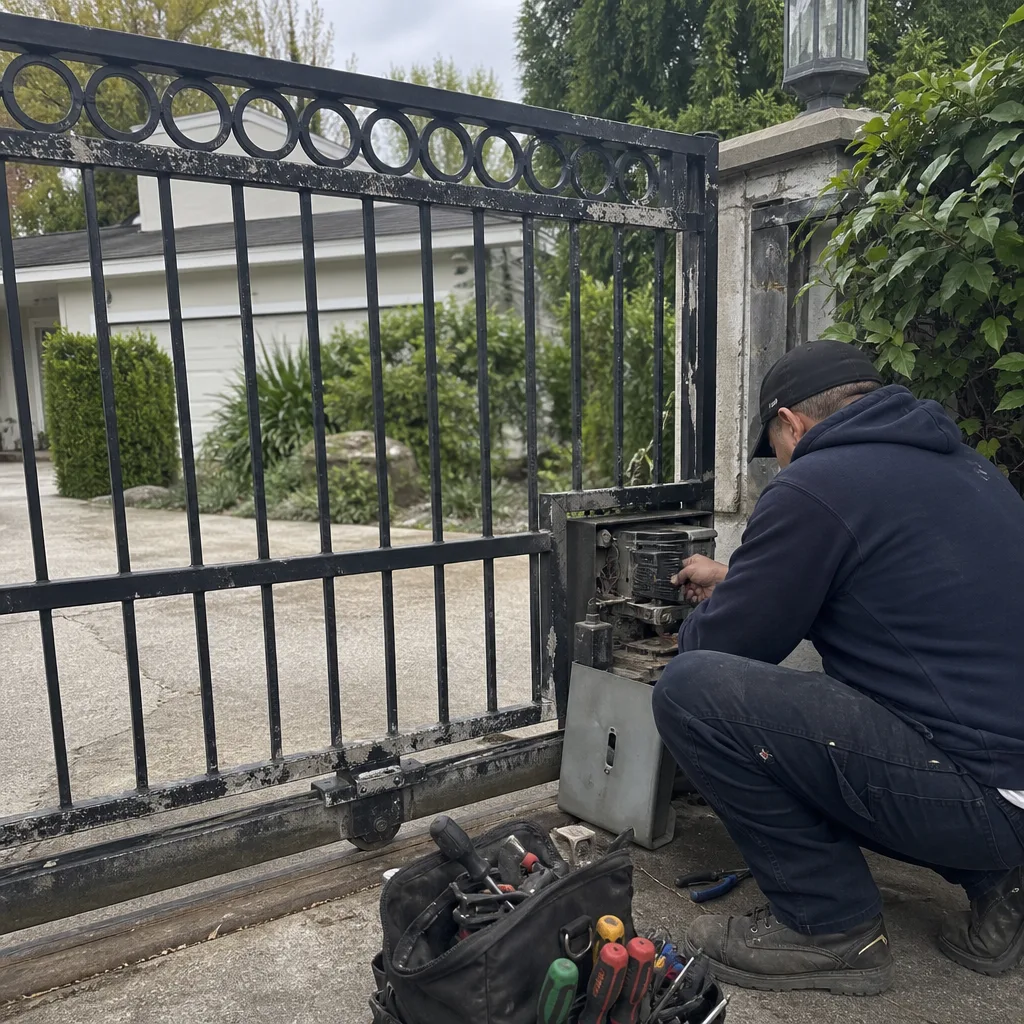 Before
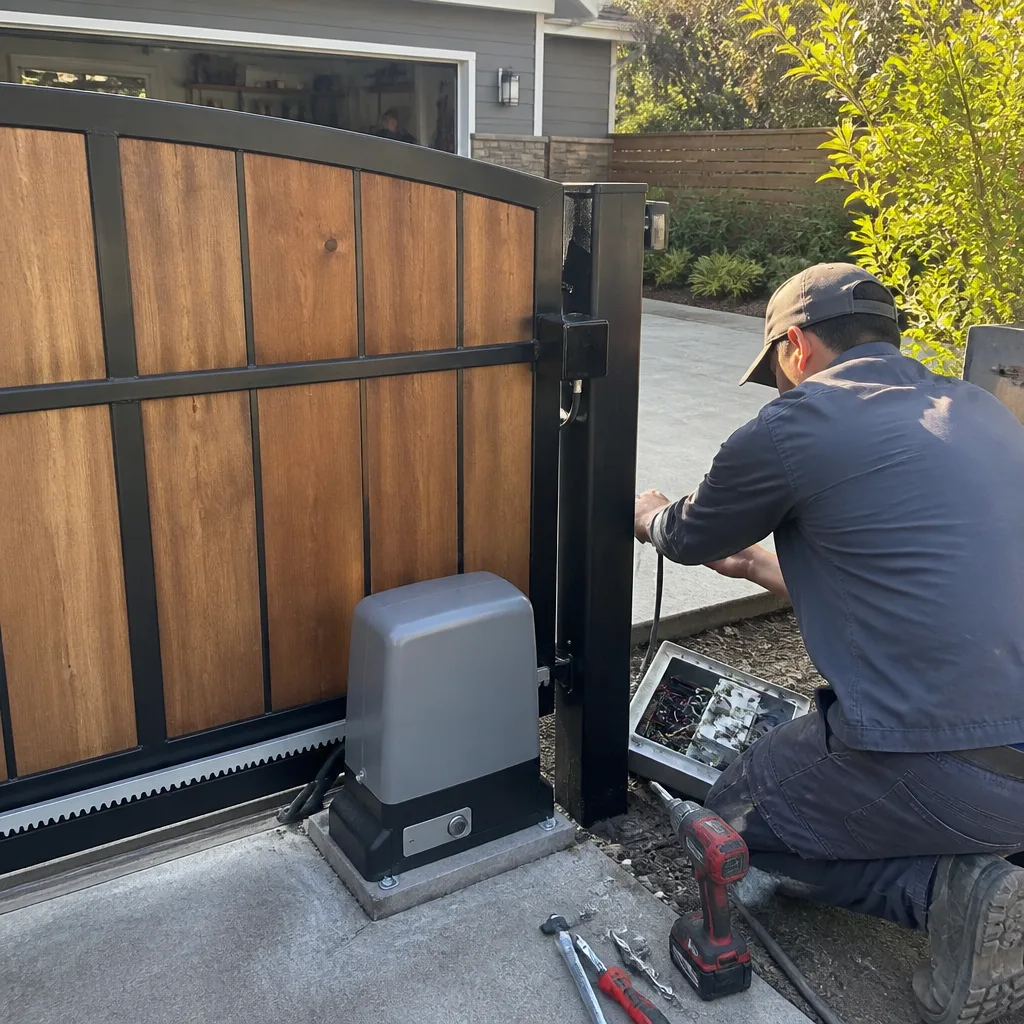 After
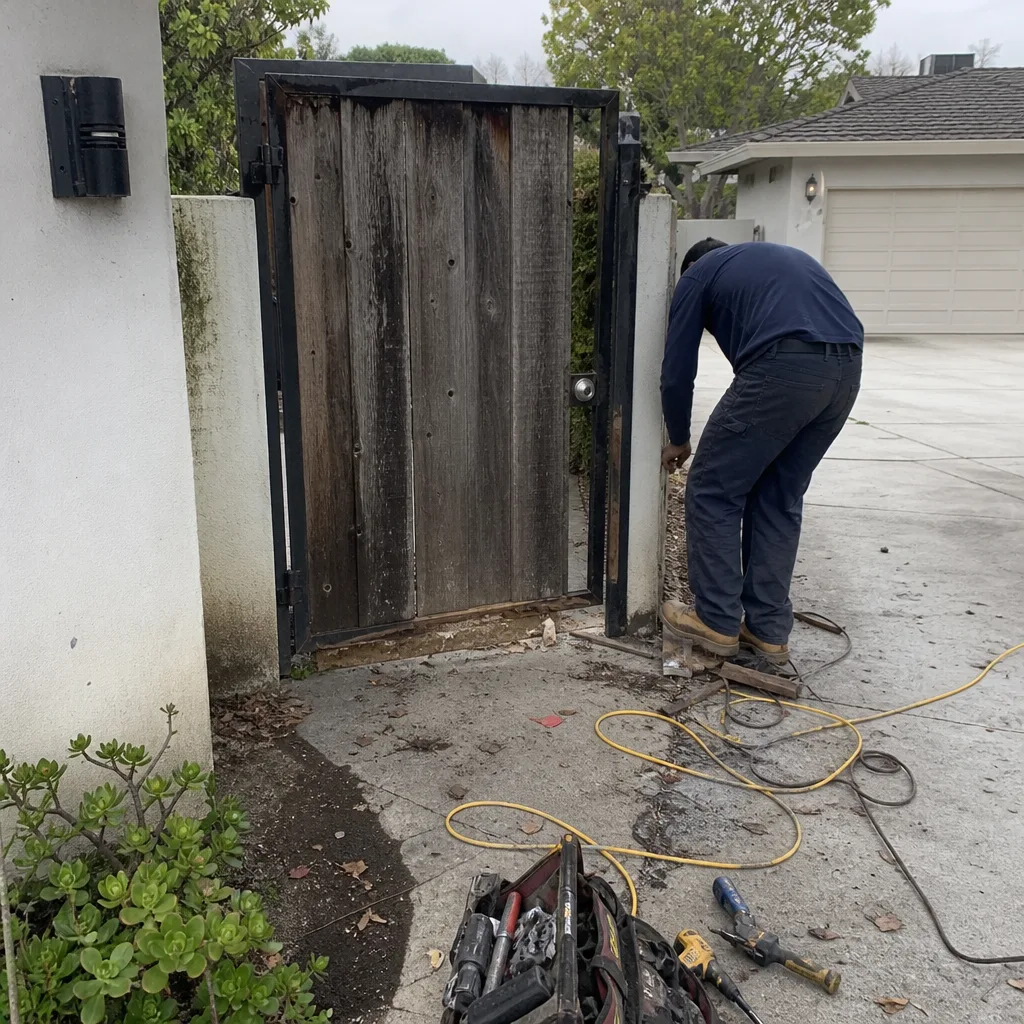 Before
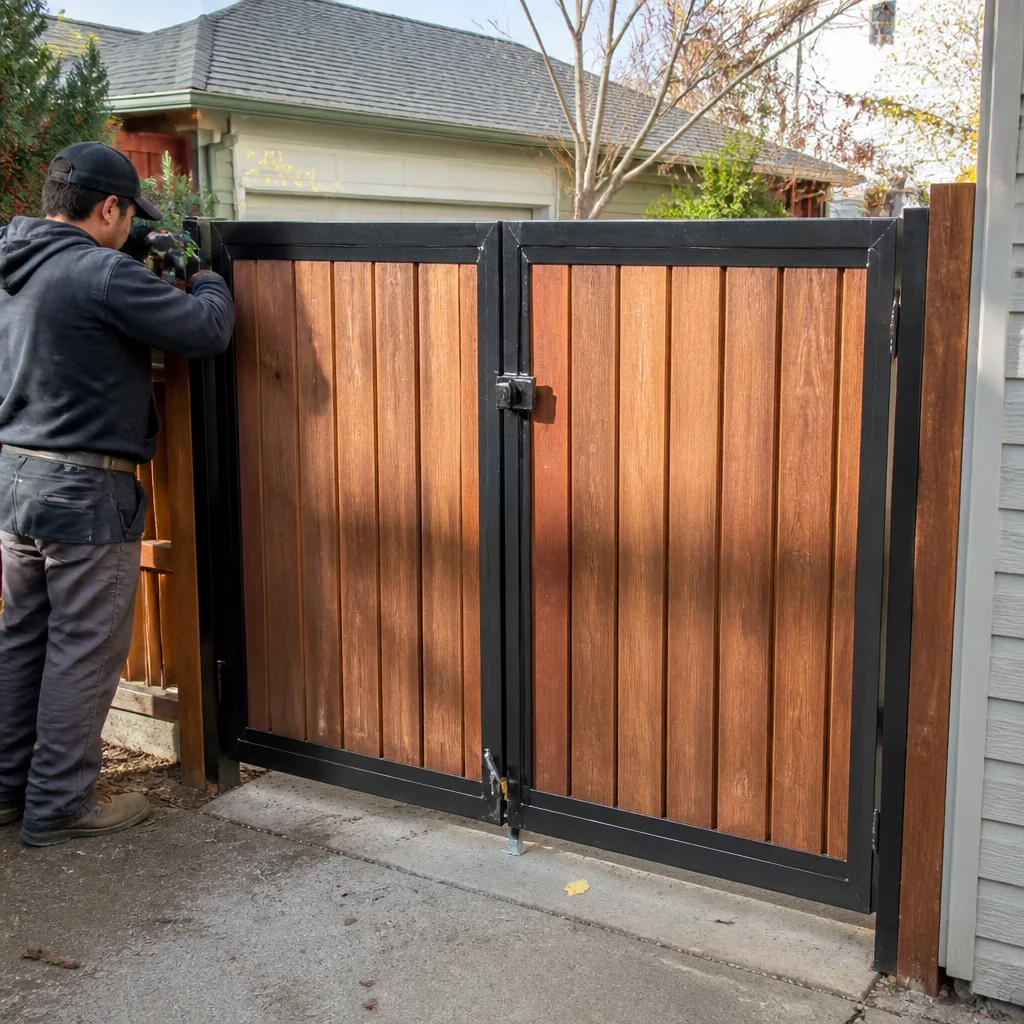 After
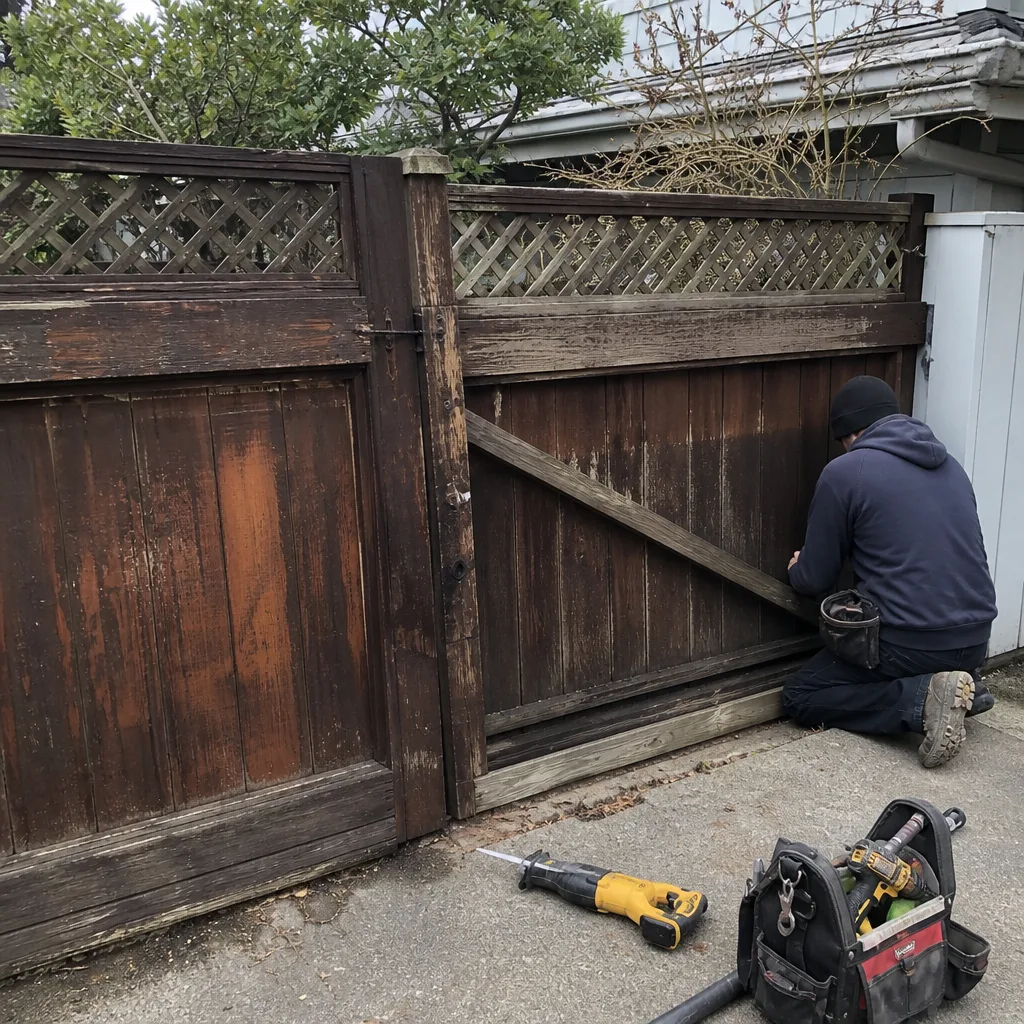 Before
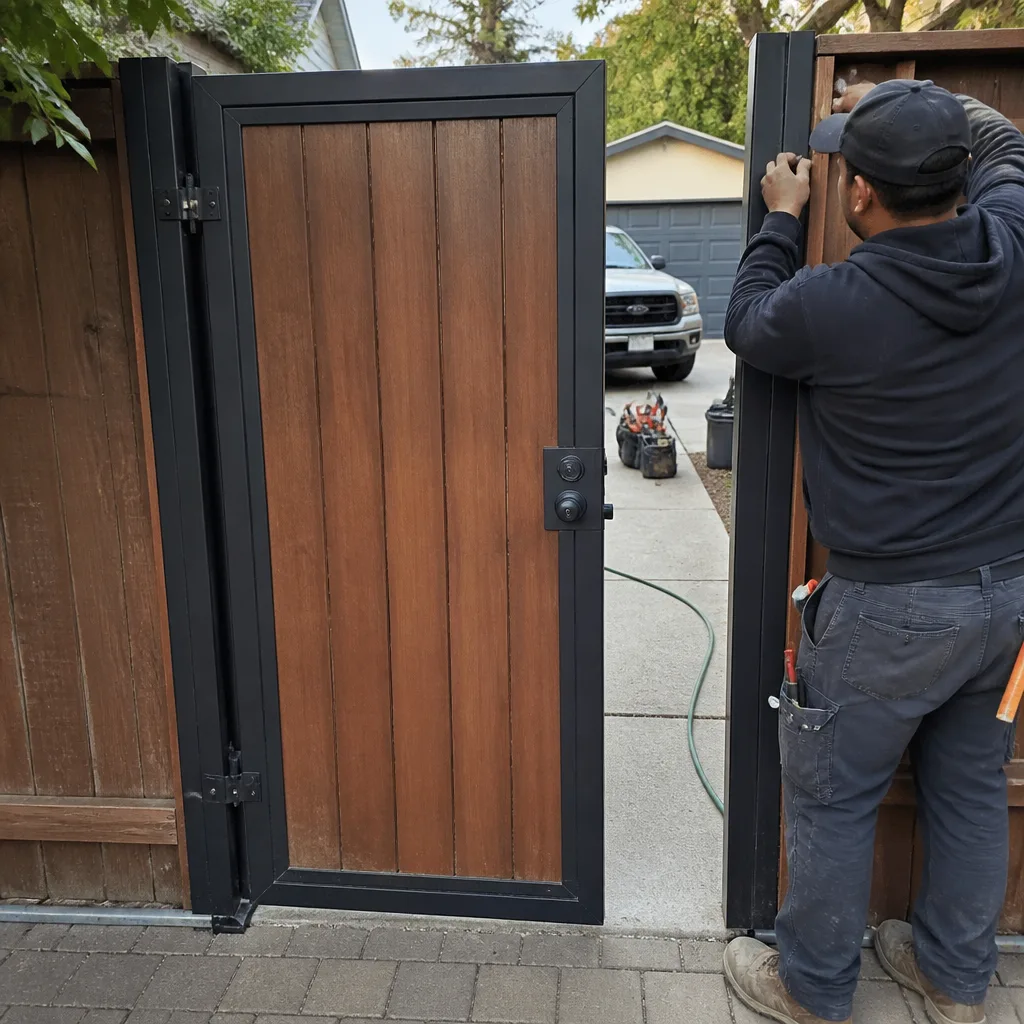 After