
Last updated November 2, 2026
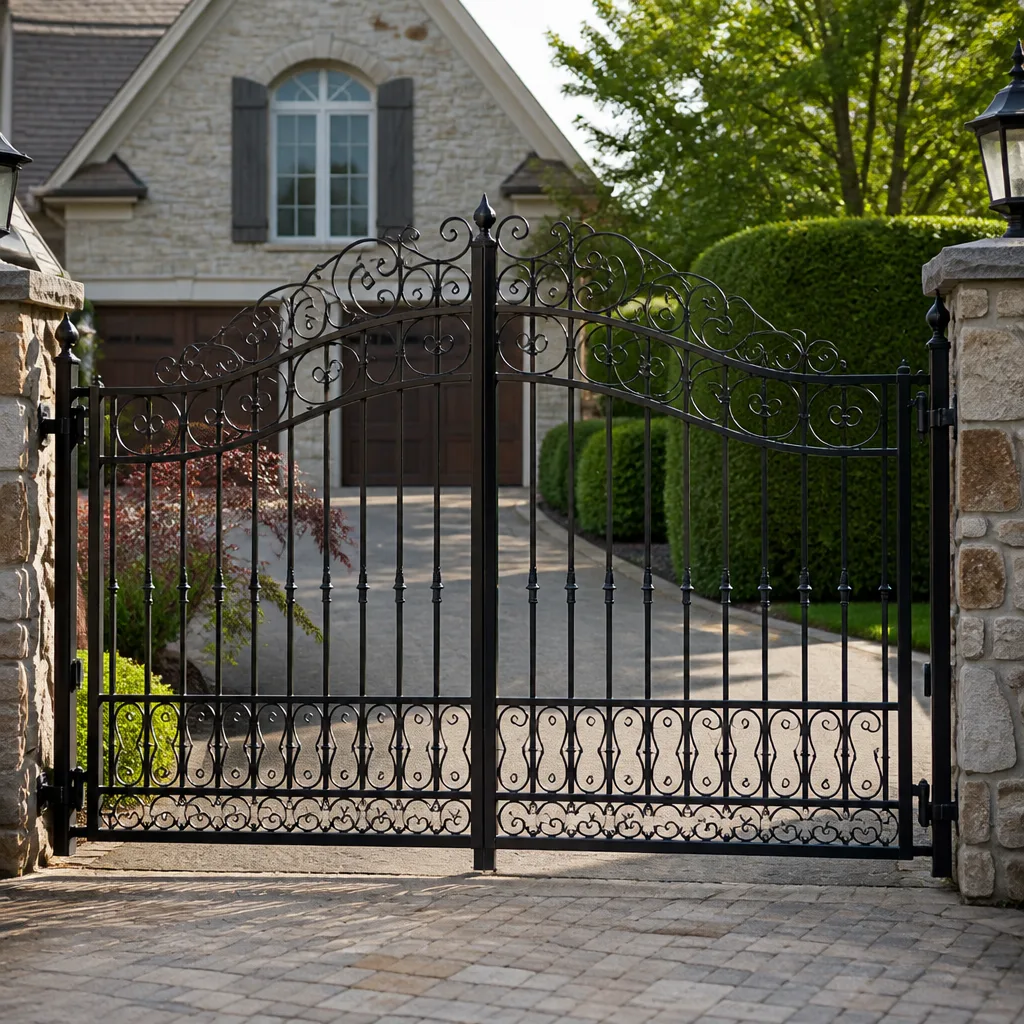 Wrought iron
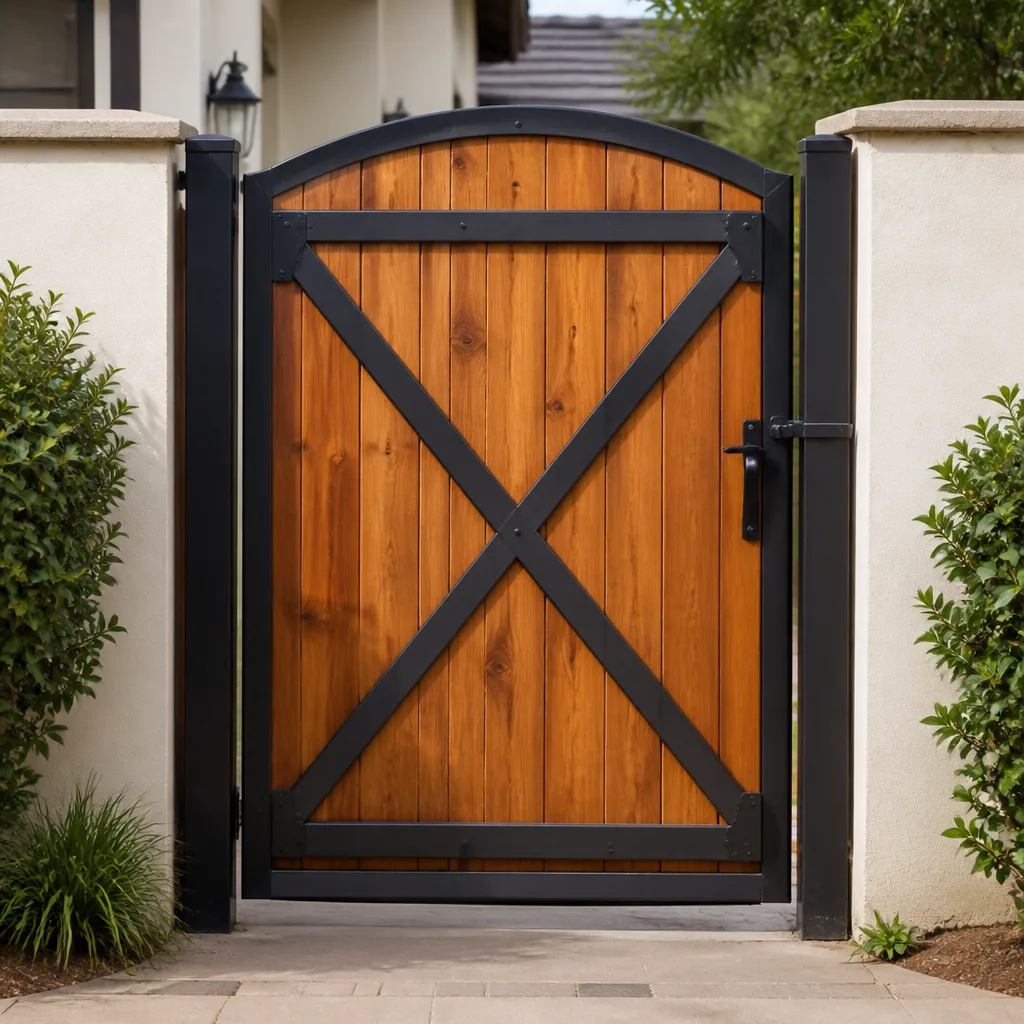 Wood & steel frame
 Farm & ranch
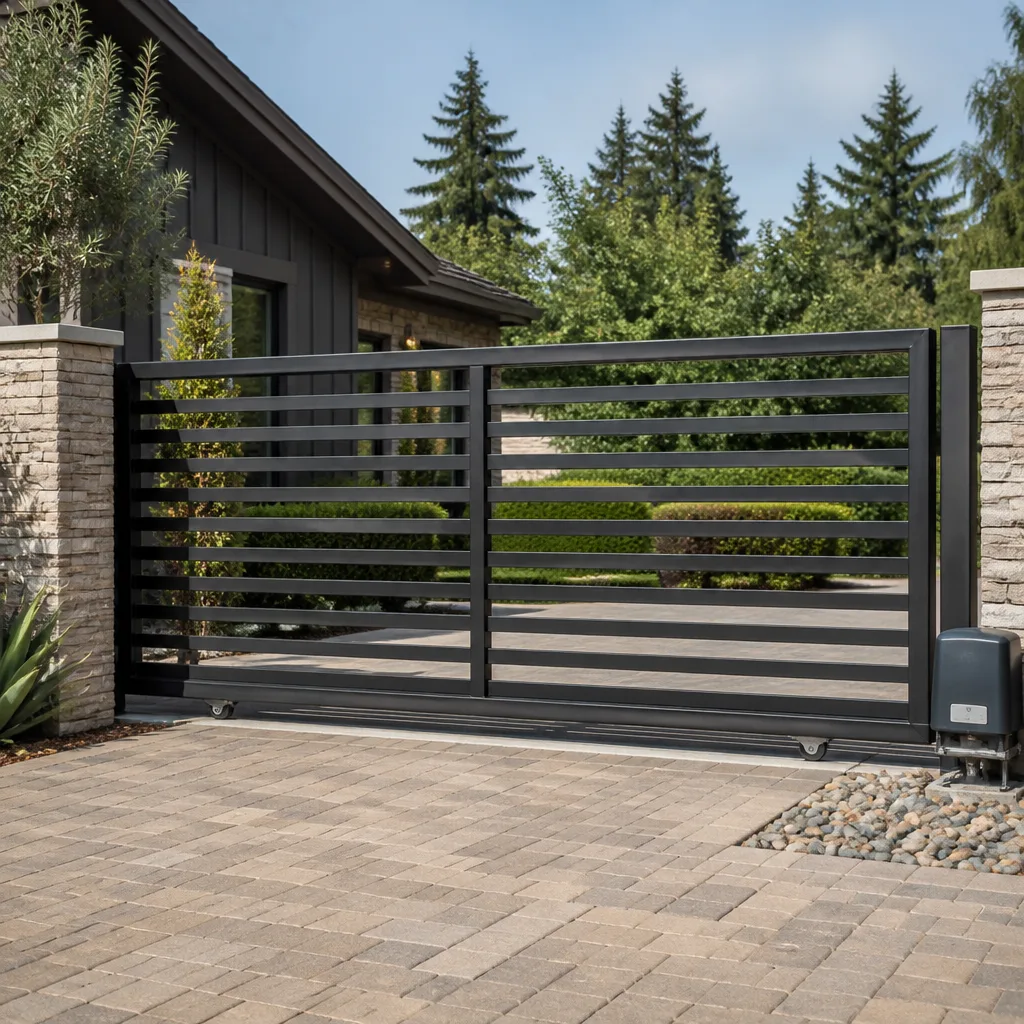 Sliding driveway gates
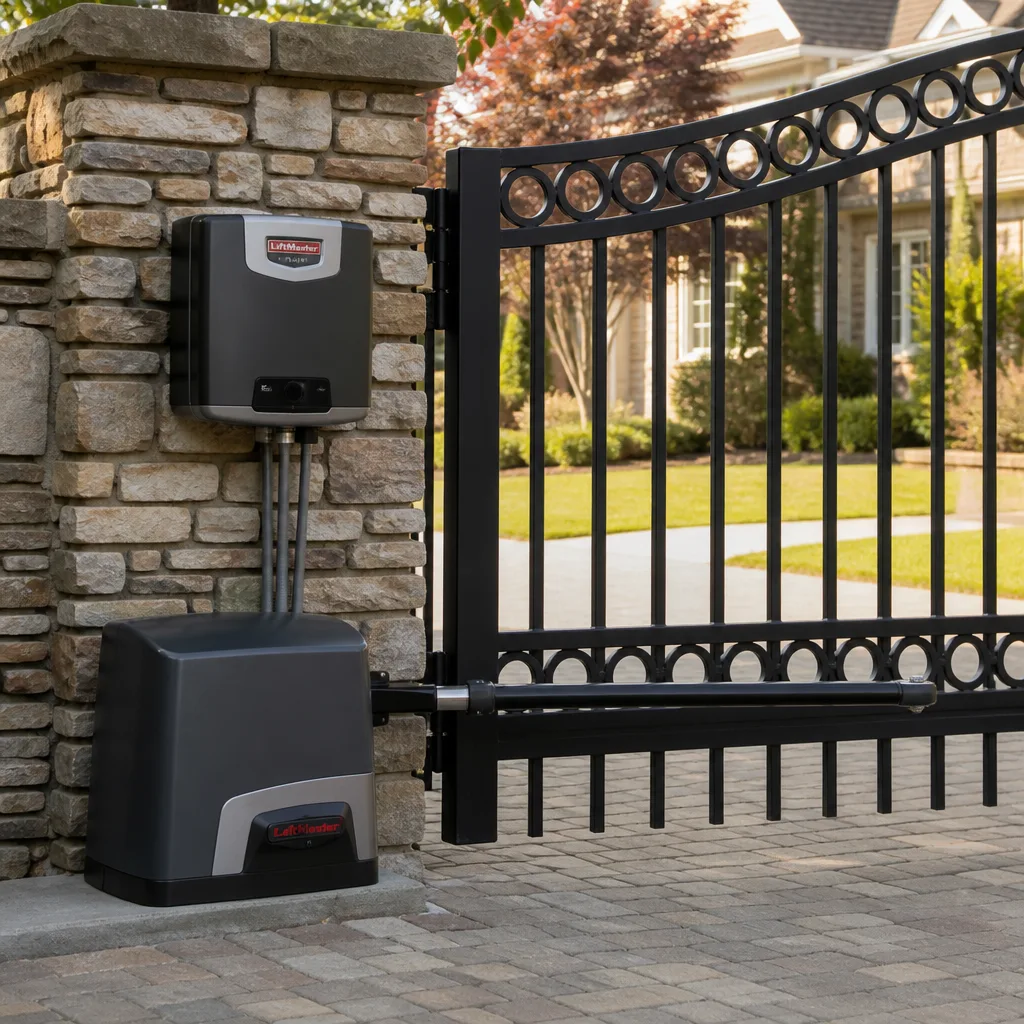 LiftMaster operators
Free on-site gate assessment - hinges, posts, and your LiftMaster or Nice gate operator checked before anything is quoted
The assessment is free and the quote is the invoice.
Get your free estimateGate Repair Maintenance Checklist for San Carlos Homeowners
Most gate maintenance checklists tell you to lubricate the track. That’s bad advice on a lot of San Carlos gates, and here’s why. The nylon and plastic drive components inside modern residential operators from brands like LiftMaster and Ghost Controls don’t want petroleum spray. They want either nothing, or a specific dry lubricant. The wrong product attracts grit, turns into a paste, and wears the gear out years early. We’ve opened operator housings in San Carlos where a homeowner’s good intentions took a smooth-running screw drive and turned it into a grinding mess. This guide gives you a checklist that accounts for your operator type, your gate material, and San Carlos’s actual conditions: coastal fog, steep lots, and soil that never fully stops moving. By the end, you’ll know exactly what to do monthly, what to leave alone, and when a five-minute fix crosses into territory where our Gate Repair services can help should stop and call a gate specialist.
Quick Answer
San Carlos homeowners should run a five-minute monthly gate walkthrough checking hinge condition, post alignment, sensor wiring, and battery backup status, plus a deeper seasonal pass that includes a lubrication matrix specific to their operator type, a full auto-close and obstruction test, and a check for hillside soil movement. Once a year, a technician inspection should test capacitors, control boards, loop detectors, and torque limits, because those items are not safe or practical for a homeowner to open up and inspect themselves.
Styles & brands we work with
- Wrought iron
- Wood & steel frame
- Farm & ranch
- Sliding driveway gates
- LiftMaster operators
Table of Contents
- Lubrication Matrix by Gate Operator Type
- Hillside Property Gate Maintenance in San Carlos
- Battery Backup Health Check Protocol
- San Carlos Seasonal Gate Maintenance Calendar
- The Five-Minute Monthly Owner Walkthrough
- The Annual Technician Inspection
- Common Mistakes to Avoid
- When to Call a Professional
Lubrication Matrix by Gate Operator Type
Here is the sentence every generic checklist gets wrong: put lubricant on the track. On a chain-drive operator, spraying the chain with WD-40 or white lithium gives you a quieter week and then a sticky, grit-coated mess. The correct product depends on exactly what kind of operator your San Carlos gate uses.
Chain-drive operators
Chain-drive gates are common on heavier steel gates, commercial properties, and long slide gates. The chain wants a dry film or minimal-wear chain lube, applied sparingly to the inside of the links, not soaked. We work on Viking and DoorKing chain operators regularly in San Carlos, and the most common follow-up repair we see after a homeowner services one is a gummed-up chain that starts binding on the idler sprocket.
Screw-drive operators
Screw-drive operators like many LiftMaster residential swing and slide units run a threaded rod through the drive carriage. These want almost no lubrication. A dry silicone spray, wiped off immediately, is the most these should ever see. Petroleum products on a screw drive make the carriage track dirt into the threads. In San Carlos’s dry summer dust plus coastal moisture mix, that combination creates exactly the paste that eats the drive nut.
Linear actuator and hydraulic systems
Linear actuator systems, common on estate-class gates and some FAAC and BFT installations, are sealed units. They do not need homeowner lubrication. The maintenance task on these is inspection: looking for fluid seepage at the shaft seal, listening for grinding, and watching for jerky motion. If you see fluid around the actuator, stop using the gate and call a professional. That seal failure means the actuator is running dry, and continuing to cycle it causes damage that lubrication cannot fix.
What goes on hinges and wheels
The gate’s physical hinges, pivot points, and slide gate rollers do need lubrication, but not the same product. Use a white lithium spray or a heavy-duty silicone spray on metal-to-metal points: hinge pins, wheel bearings on slide gates, and the V-track roller assembly. The operator’s drive components and the gate’s structural hardware are two different systems. Mixing that up is the single most common mistake we see on maintenance-related service calls in San Carlos.
The product rule
- Metal-to-metal hinges and rollers: white lithium or heavy silicone spray, once per season.
- Chain drives: dry chain lube, sparingly, once or twice per year.
- Screw drives: dry silicone spray or nothing, applied only if visibly dry.
- Linear actuators and sealed hydraulics: no homeowner lubrication. Inspect only.
- Plastic and nylon components: nothing. Ever. Lubricant accelerates wear on these.
Hillside Property Gate Maintenance in San Carlos
San Carlos is a hillside town. Streets up in the Devonshire Canyon area, the lots off Crestview, the long driveways above Carmelita, and the steep parcels near Eaton Park all share a maintenance issue that flat-land checklists completely miss: the ground under the gate posts is never stable. Clay soil expands in winter rain, contracts through the dry summer, and on a slope, gravity makes the whole soil mass creep downhill, slowly.
What we see in San Carlos, over and over, is a gate that was perfectly aligned at installation, and then eighteen months later, the latch side post has moved a quarter inch downslope. The gate still opens, but it drags. The operator’s limit switch is working harder. The safety sensor beam drifts out of alignment. The auto-close photo eye gets blocked by the shifted post, and the gate starts reversing or refusing to close.
The fix is measurement, not adjustment. Here’s the protocol that catches hillside movement before it overstresses the operator:
- Measure the gap between gate and post at the top, middle, and bottom once per month during winter, and once per quarter the rest of the year. Write it down. A quarter-inch drift over six months is a warning sign, not a repair emergency, but if it keeps moving, the post needs attention.
- Check the gate’s stop and latch alignment by closing the gate slowly and watching whether the latch plate line up without forcing. Forcing means the post has moved.
- Watch for a gate that travels faster or bounces near the end of its cycle. On a shifted post, the operator often overshoots and then reverses, which is the motor working against the warp, every single cycle.
- Inspect the concrete collar around the post base for cracking or gapping. A hairline crack where the post enters the concrete is an early sign of movement, and it shows up before the gate itself starts acting up.
If the measurements show movement, a gate specialist can reset or deepen the post footing, or in some cases install a tie-back to stabilize a post on a steep grade. Waiting until the gate won’t close is the expensive version of the same repair, and by then, the operator’s motor has been fighting the drift for months. On a hillside in San Carlos, the ground does not correct itself.
Battery Backup Health Check Protocol
Power outages in San Carlos are usually short, but they’re not rare. Wind events up in the hills take out a transformer, and a gate without functioning battery backup is just a locked gate. Most homeowners check the battery the same way: they look at the little status light, see green, and assume its fine. The problem is that a battery can hold enough surface charge to show a green light while being too weak to actually open a heavy gate under load.
The check that matters is a load test, and it takes five minutes:
- Find the battery backup unit inside or adjacent to the operator housing. On LiftMaster and Elite systems, it’s typically a sealed lead-acid or lithium unit in a separate compartment.
- Kill power to the operator at the breaker or the operator’s dedicated switch.
- Run the gate through two full open-and-close cycles on battery only. It should move at full speed, with no hesitation at start, and no slowing at mid-travel.
- Listen for a low-battery alarm or a dim status light after the second cycle. If the gate slowed noticeably on the second cycle, the battery’s capacity is fading.
- Restore power and run one more full cycle to confirm the operator recharges the battery and switches back to line power cleanly.
On a gate that’s used dozens of times a day, a backup battery that’s four or five years old is usually at the edge of its useful life, even if the light is green. The coastal air in San Carlos isn’t especially corrosive, but the temperature swings in a metal operator housing shorten battery life more than most people expect. If your system fails the load test, replacing the battery is a straightforward repair, and it’s one we always recommend before storm season. If the load test passes, repeat it every six months.
San Carlos Seasonal Gate Maintenance Calendar
San Carlos doesn’t have four seasons in any useful sense. We have a wet winter, a damp spring, a hot dry summer, and a foggy fall. The gate tasks that matter here are organized around those four realities, not a template designed for a place with snow or summer thunderstorms.
October and November: Pre-wet season prep
- Run the battery backup load test described above. This is non-negotiable before the storm months.
- Clear drainage around the gate posts and the operator pad. Standing water against a post in San Carlos clay is an invitation for movement.
- Check all weep holes on a steel gate frame are clear, and touch up any exposed metal at the bottom rail. Winter rain finds bare steel and starts rust within the season.
- Run the full sensor and obstruction test: place an object in the gate’s path during closing and confirm it reverses before contact.
December through February: Wet season vigilance
- Re-measure hillside post alignment monthly. This is the period when San Carlos hills move the most.
- Watch for the operator running slower than usual, which often means moisture in a limit switch or a connector that’s starting to corrode.
- Inspect the keypad and intercom enclosure for water intrusion. Fog and rain together are harder on outdoor keypads than rain alone.
March through May: Post-rain recovery
- Lubricate metal-to-metal hinges and slide rollers. The wet season has washed away or diluted last fall’s lubrication.
- Clean the photo eyes and reflectors thoroughly. Winter road spray and mud on a San Carlos driveway fog the lenses and cause nuisance reversals.
- Re-torque any visible fasteners on the gate frame and hinge brackets. Wet-season soil movement works bolts loose even when the post hasn’t shifted enough to need a repair.
June through September: Dry season dry maintenance
- Dust management: blow out the operator housing vents and the keypad crevices. Dry summer dust in San Carlos cakes onto any residual lubricant and creates the grit paste that wears drive components.
- Run a full auto-close timing check. With the kids and summer traffic, adjust the auto-close timer so the gate doesn’t close on a car or a pedestrian.
- Check for sun damage on plastic enclosures, especially the photo eye housings and the keypad face. UV on a south-facing San Carlos driveway is relentless.
This calendar works for any operator brand. Whether your gate runs on a Viking, a DoorKing, an Elite, or a Ghost Controls unit, the local climate and the local soil are the same.
The Five-Minute Monthly Owner Walkthrough
This is the walkaround that takes five minutes and catches most problems while they’re still cheap. You don’t need tools for this. You just need to be paying attention, because the gate tells you what’s wrong if you watch and listen.
- Stand and watch one full open-and-close cycle. Look for hesitation at start, jerky movement at mid-travel, or overshoot at the limits. Any of the three is an early mechanical or electrical symptom.
- Listen for the change in sound. A gate that has suddenly gotten louder, developed a rhythmic scrape, or started humming without moving is telling you exactly where the problem is. Don’t wait for the failure.
- Look at the hinge pins and the slide rollers. Check for visible wear grooves, rust trails, or a roller that’s not turning.
- Check the photo eyes are aligned by watching the indicator lights: most systems show a solid light when aligned and a blinking light when misaligned or obstructed.
- Walk the full length of the gate and run your hand over the bottom rail to feel for rust bubbles starting under the paint, especially on the side facing prevailing wind.
- Check the track for debris if you have a slide gate. Even a small rock in the V-track gets ground into the roller bearings over time.
If the walkthrough turns up anything beyond a dirty photo eye or a pebble in the track, that’s where the monthly walkthrough crosses into professional territory; check Gate Repair Permits, Codes & Inspections in CA: What You Need to Know for regulatory context. The operator housing, the control board, the loop detector: these are not items to open up without training. We tell every San Carlos customer the same thing: you maintain the gate, we maintain the system. The line between them is the operator enclosure.
The Annual Technician Inspection
Once a year, a trained gate technician should open the operator and look at the components a homeowner never sees. We’re gate-only specialists, which means this inspection is exactly our job, and we do gate repair in San Carlos year-round, so scheduling it typically takes one visit.
Here’s what the annual inspection should include, and why each item matters:
- Capacitor test: A failing capacitor is the most common cause of a gate that hums but won’t start, and it often degrades for months before it fails completely. Testing it annually replaces a $40 part before it leaves you locked out.
- Control board inspection: Look for swollen capacitors, heat discoloration, or corrosion on the terminals. San Carlos coastal fog accelerates connector corrosion inside a housing that isn’t perfectly sealed.
- Limit switch and force setting verification: Adjusting the open and close limits and the motor force settings prevents the gate from slamming and extends the motor’s life. These settings drift with temperature and wear.
- Loop detector test: If your gate uses an underground vehicle loop, the sensitivity setting needs annual checking. A detector that’s too sensitive picks up a bicycle or a passing car on the street, and a detector that’s too weak won’t see a small car.
- Safety sensor and obstruction test under load: Testing all the safety systems, not just the photo eyes, but the auto-reverse and the edge sensors if installed.
- Full hardware torque pass: Every hinge bolt, every bracket, every post anchor gets checked with a torque wrench, not just visually glanced at.
- Battery backup replacement recommendation: Based on the load test and battery age, a recommendation on whether to replace before the next storm season or keep running it.
An annual inspection on a residential gate typically costs between $150 and $250 in the San Carlos market, but it catches $800 to $2,000 failures before they happen. For estate gates and commercial systems, the inspection is worth even more, because a failed commercial gate is a business interruption, not just an inconvenience. If you bought a home with an existing gate and have no service history, that first annual inspection is doubly important: you’re establishing a baseline for how the system should behave.
Common Mistakes to Avoid
After years of repair calls across San Carlos, these are the patterns we see repeatedly. Each one started with a reasonable intention and ended with a service call that cost more than it needed to.
- Using WD-40 on drive components. WD-40 is a penetrating oil and water displacer, not a lubricant. On a chain or screw drive, it dissolves whatever real lubrication was there and leaves the components effectively dry. Then the grit in a San Carlos dry season does the rest.
- Lubricating plastic and nylon parts out of habit. Nylon gears, plastic carriage slides, and composite bushings are self-lubricating by design. Adding lubricant softens the polymer and accelerates wear.
- Adjusting the hinge on a shifted post instead of fixing the post. If the gate was squared up last year and now it’s dragging, the post moved, not the hinge. Adusting the hinge to compensate just transfers the stress to the operator.
- Ignoring a slow change in sound. People notice a sudden loud noise. The gradual change, the gate that’s a little louder every week for two months, is the one that becomes a seized bearing and a burned-out motor.
- Running a battery backup until it fails during an outage. The green light on a backup battery only means the charger is working. Without the load test, the first time you learn the battery is dead is the power outage when you can’t leave your own driveway.
- Greasing slide gate rollers without cleaning the track first. The track is where the grit lives. Lubricating on top of grit grinds the contamination into the bearing seal and shortens roller life.
- Calling a general handyman for an operator problem. The operator’s control board, motor, and safety circuit are specialized equipment. A handyman can fix a sagging gate, but an operator that won’t open needs a gate technician. The repair cost after a misdiagnosis is always higher than the first correct visit.
When to Call a Professional
There’s no rule that says a homeowner should never touch a gate. But there’s a clear line, and crossing it is expensive. Here’s how to know which side of the line you’re on, with more guides & resources available for reference.
Call a professional if the gate trips a breaker more than once. That’s an electrical fault, not a nuisance. Call if the operator hums but doesn’t move the gate. That’s a capacitor, a gear, or a broken drive component. Call if the safety reverse or the photo eyes fail any test you run, because a gate that doesn’t reverse is a liability, and the cost of fixing the sensor now is nothing compared to the cost of what happens when it fails.
And call if you own a gate with a linear actuator, a hydraulic arm, or a commercial slide-gate operator and you see or hear anything unusual. Those systems are under enough mechanical load that a failure can cause serious injury. They are not homeowner-adjustable. We know this from working on everything from residential Mighty Mule openers to commercial Viking, DoorKing, and Elite systems. Some things you diagnose and repair. Some things you diagnose and call.
If you’re in San Carlos and not sure which category your gate problem falls into, call us. We’re gate-only specialists, we work on your brand, and we diagnose first, replacing a part only when it’s actually failed. Gate Repair San Carlos offers free estimates in San Carlos. Call (855) 395-1573.
See the difference
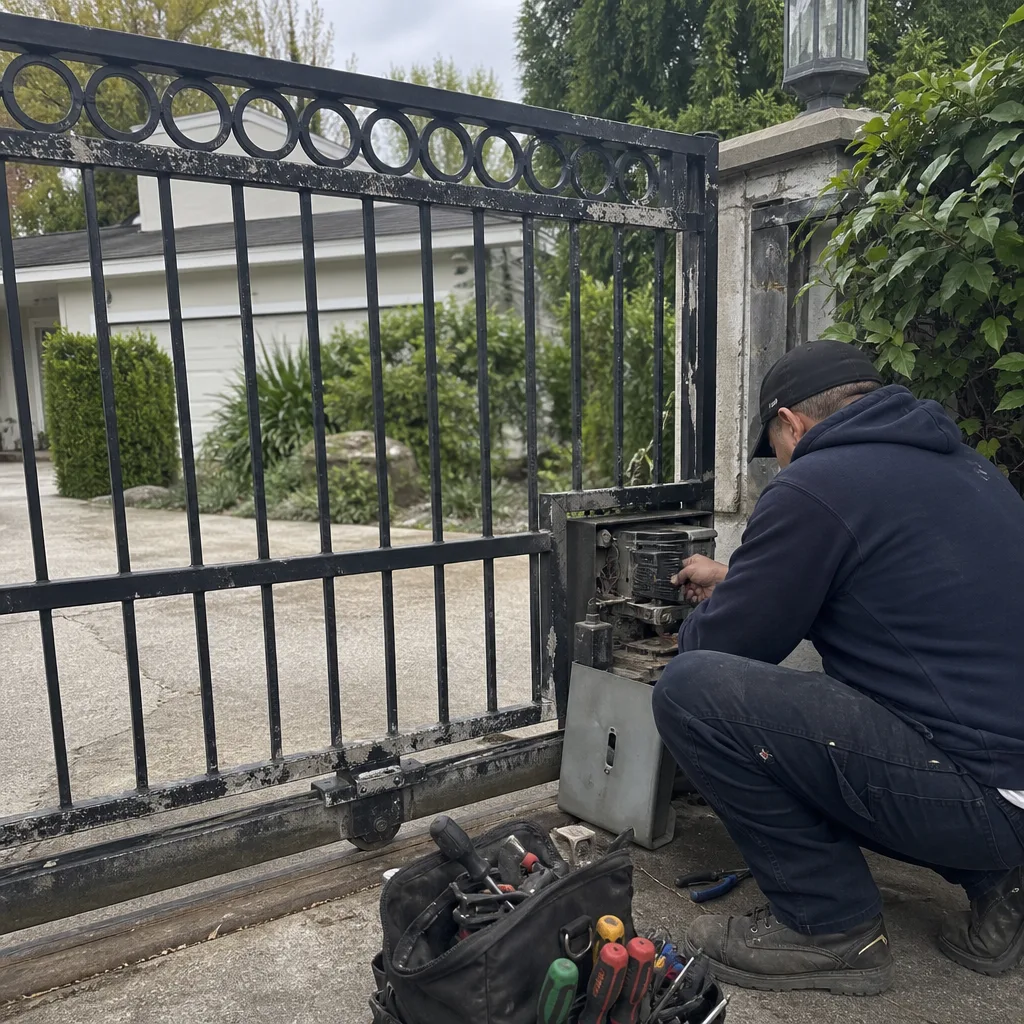 Before
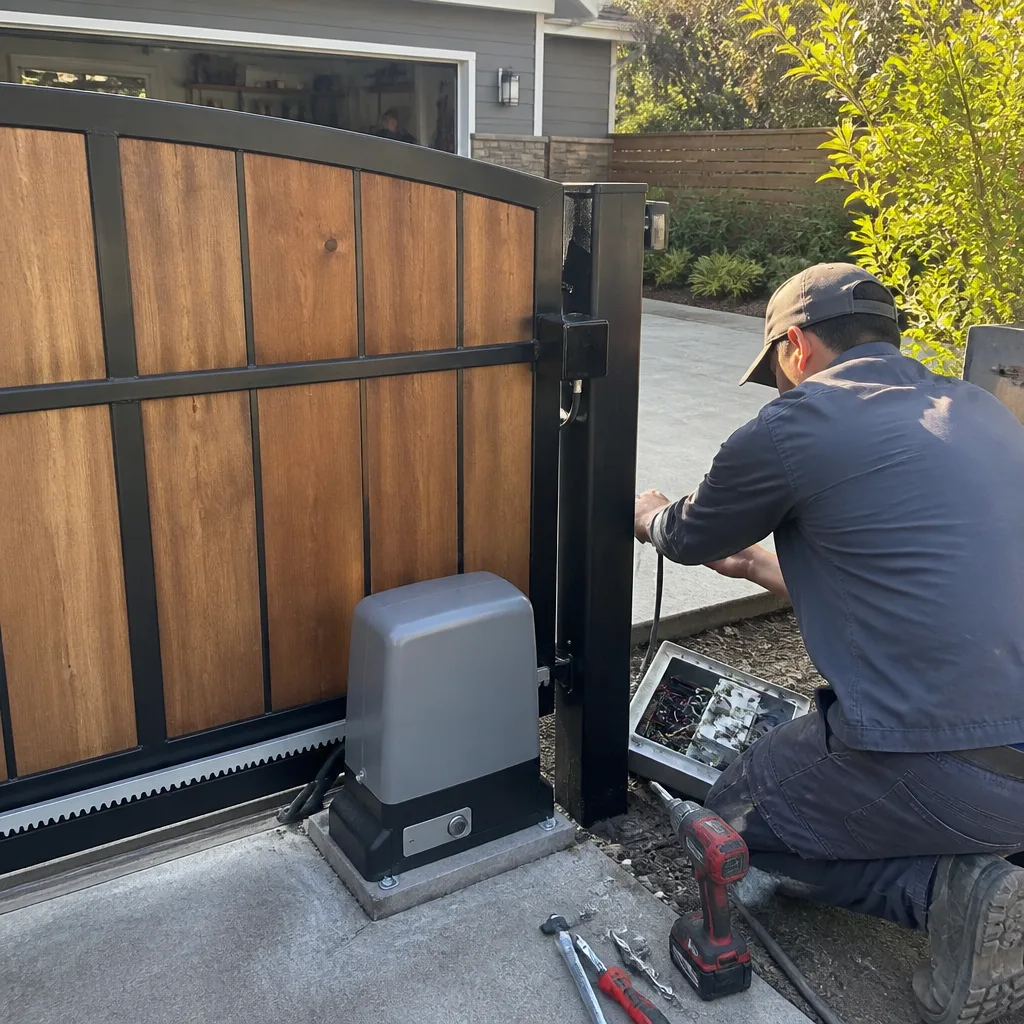 After
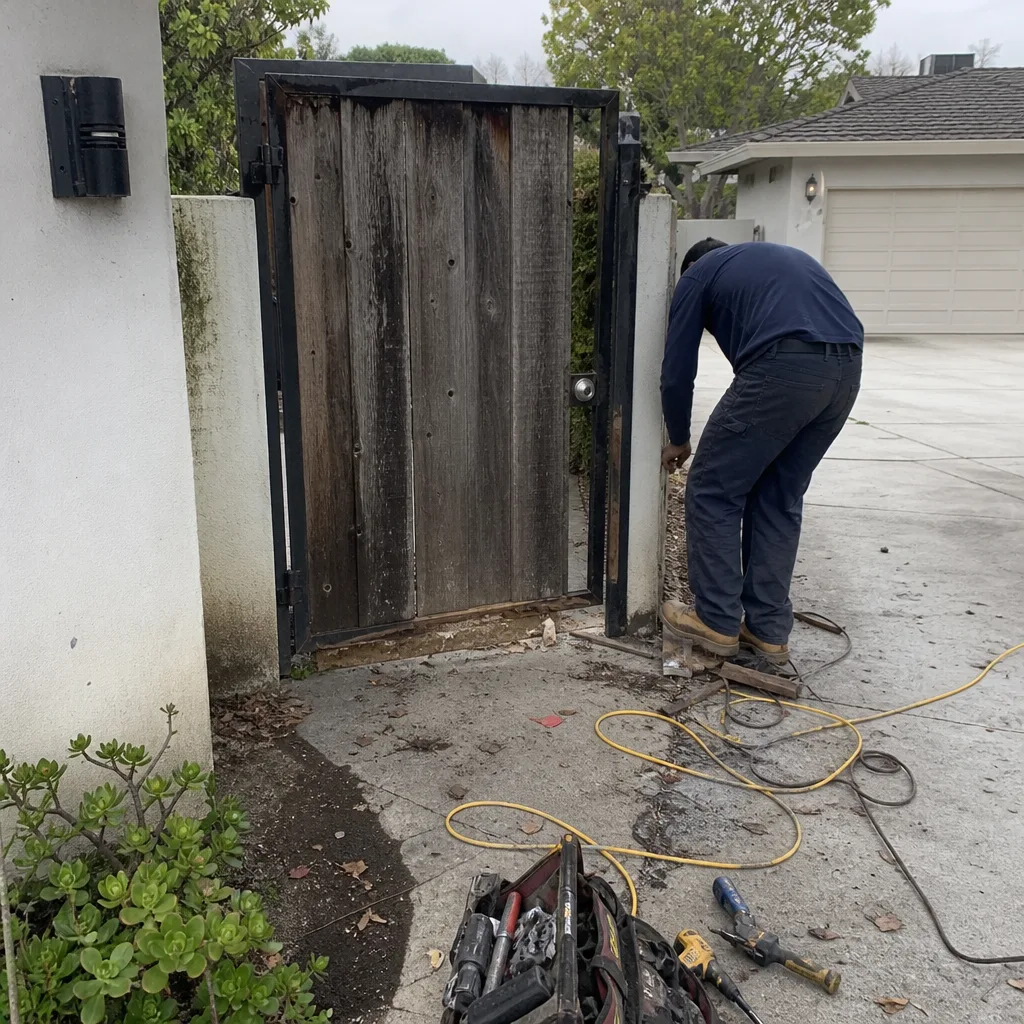 Before
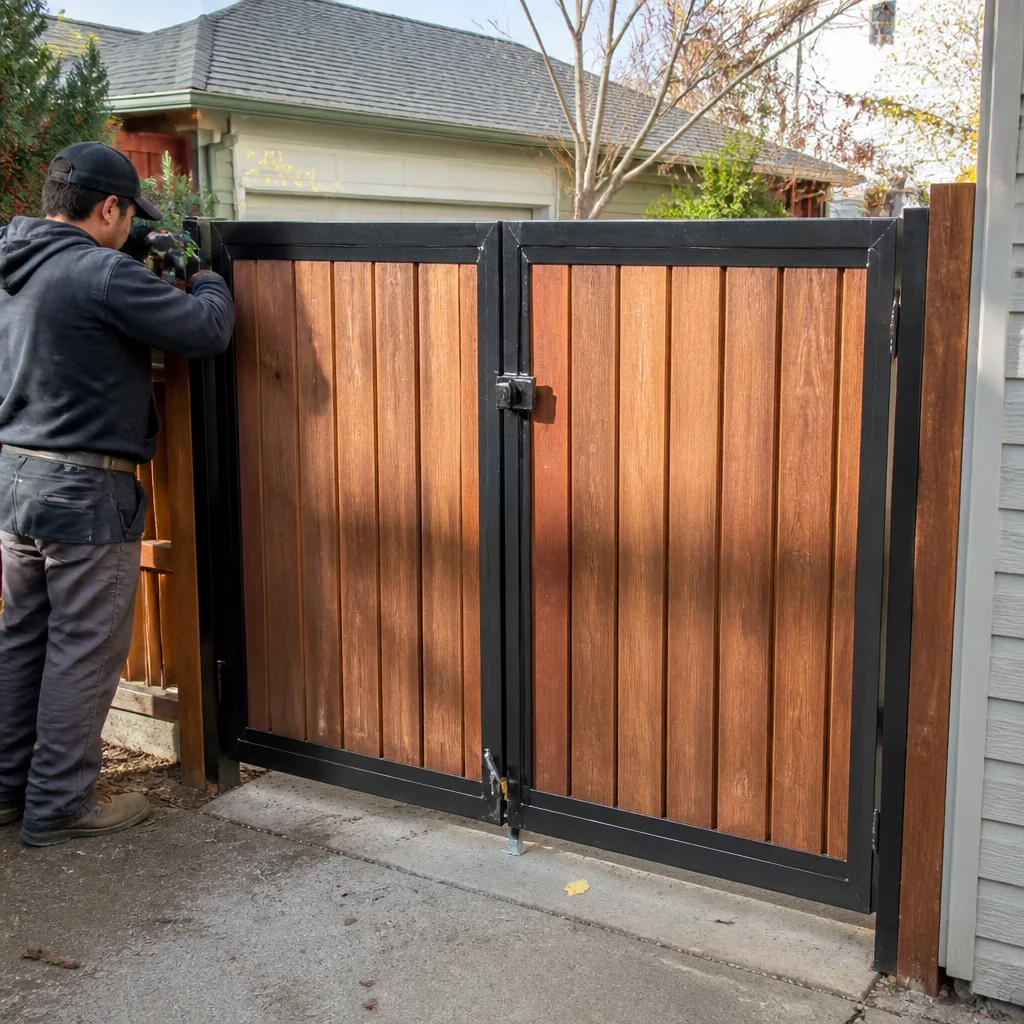 After
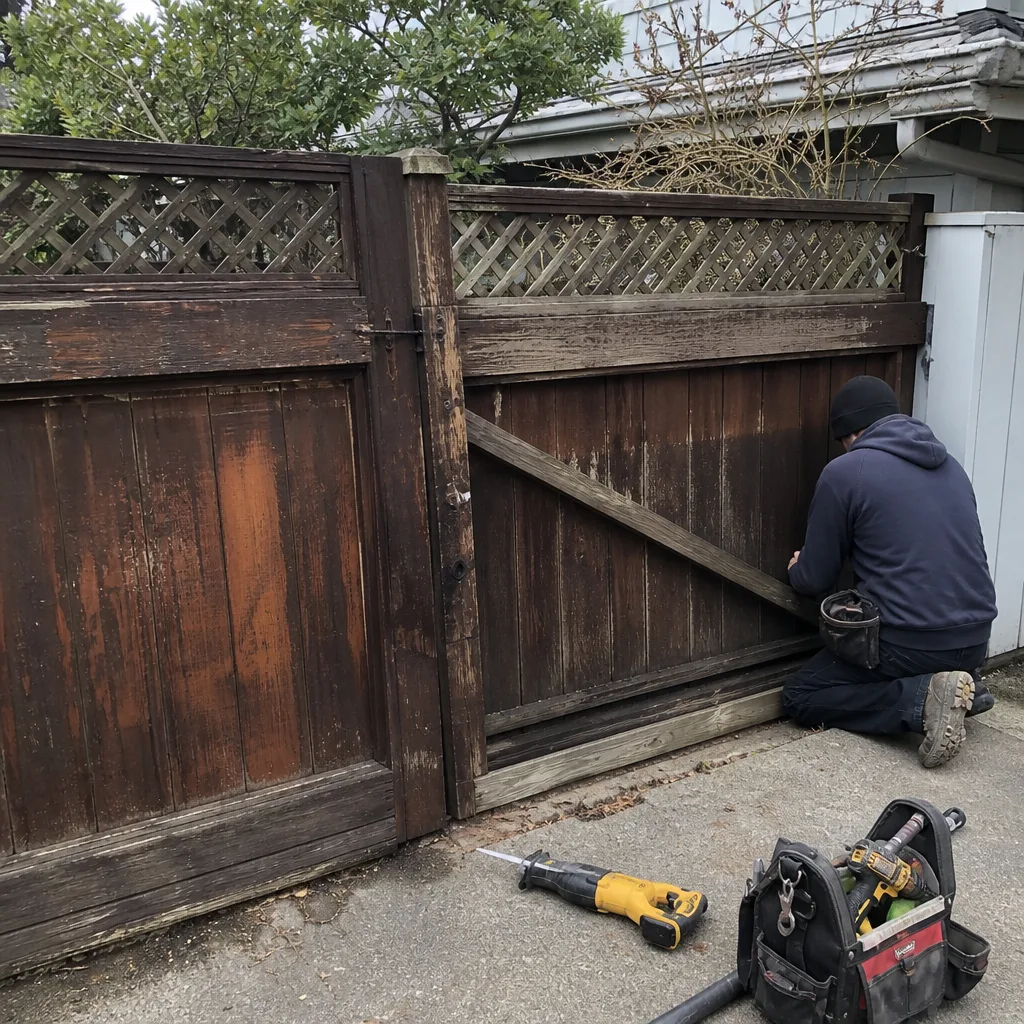 Before
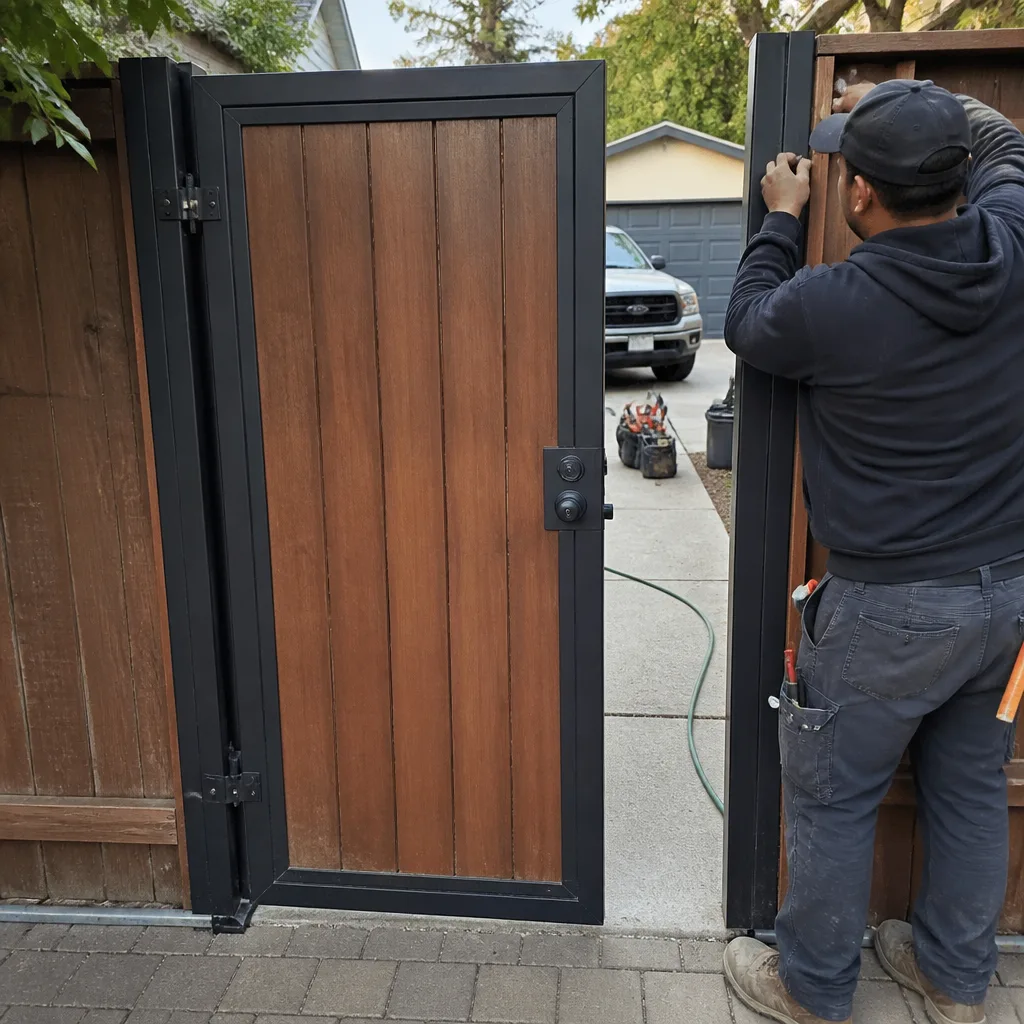 After
Frequently Asked Questions
In San Carlos, a gate needs a monthly five-minute walkthrough focusing on sound, alignment, photo eyes, and debris, plus a seasonal pass that includes battery backup load testing, lubrication by operator type, and hillside post-alignment measurement. Once a year, a technician should open the operator and test capacitors, control boards, limit switches, and loop detectors.
Chain-drive openers need lubrication once or twice per year with a dry chain lube. Screw-drive openers need almost none, and when they do, it’s a dry silicone spray wiped off immediately. Linear actuator systems on FAAC or BFT estate gates are sealed and need no homeowner lubrication. Over-lubricating with the wrong product is worse than not lubricating at all. Call (855) 395-1573 if you’re not sure which system you have.
Winter rain saturates the clay soil on San Carlos slopes, and as the ground expands and shifts, the gate posts move slightly out of alignment. The gate starts dragging against the latch or the track, and the operator slows down as it pushes against resistance. This is the most common seasonal gate complaint we get in San Carlos, and it’s usually a post-alignment issue, not an operator failure.
No, leave the gate on. If you have battery backup, the operator will run on battery until power returns. If the battery is weak or absent, the gate stays in position and you use the manual release to move it. Turning the gate off during an outage doesn’t protect anything and means you may forget to reset settings when power returns.
On most brands like LiftMaster and Ghost Controls, the battery is a sealed unit with a modular connector that a careful owner can swap. But if the system is older or you’re not sure whether the operator needs a software reset after replacement, it’s a ten-minute job for a technician. Either way, run the load test before assuming the battery is bad. We see many healthy batteries replaced because a green light was misunderstood.
For a residential gate, a thorough annual inspection in the San Carlos market typically runs $150 to $250. That includes opening the operator, testing capacitors and control boards, verifying limit and force settings, running the full safety test, and checking hardware torque. Some companies roll the inspection into a maintenance agreement, which usually includes priority scheduling for electric gate repair in San Carlos during storm season peak.
The Bottom Line
The checklist that actually keeps a San Carlos gate running isn’t the one from a national home-improvement site. It’s a maintenance plan organized around your operator type, your hillside soil, and a climate that alternates between rain-saturated clay and coastal dust. Gate ownership in San Carlos is a long-term relationship, and that means someone needs to watch the battery, measure the posts, listen to the motor, and know when to stop and call a specialist. If you’ll do the monthly walkthrough and the seasonal battery test, and bring in a gate technician once a year, the gate will outlast the operator’s warranty and then some. If you’re already at the point where the gate is being difficult, or you want help setting up a maintenance schedule for a new gate installation in San Carlos, call (855) 395-1573 for a free estimate.
Written by the team at Gate Repair San Carlos, serving San Carlos since 2017.