
Last updated November 2, 2026
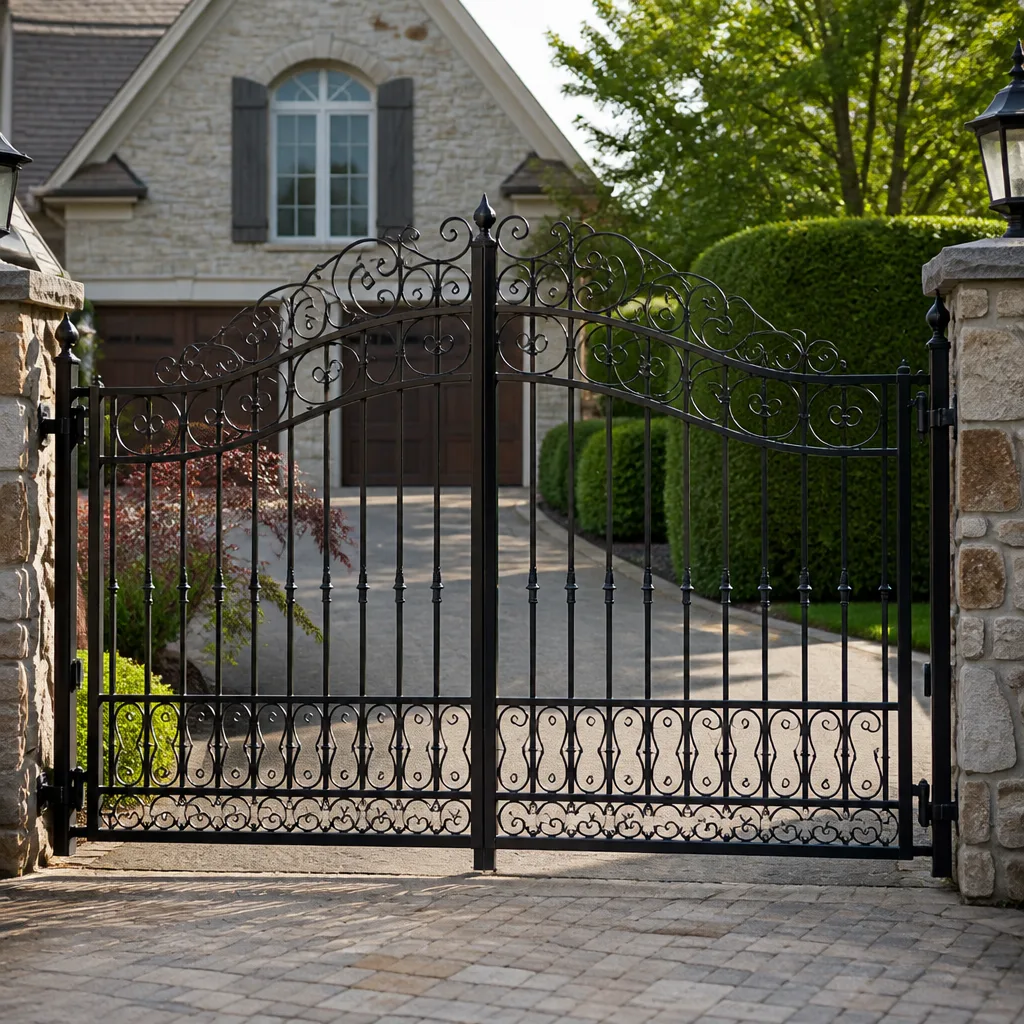 Wrought iron
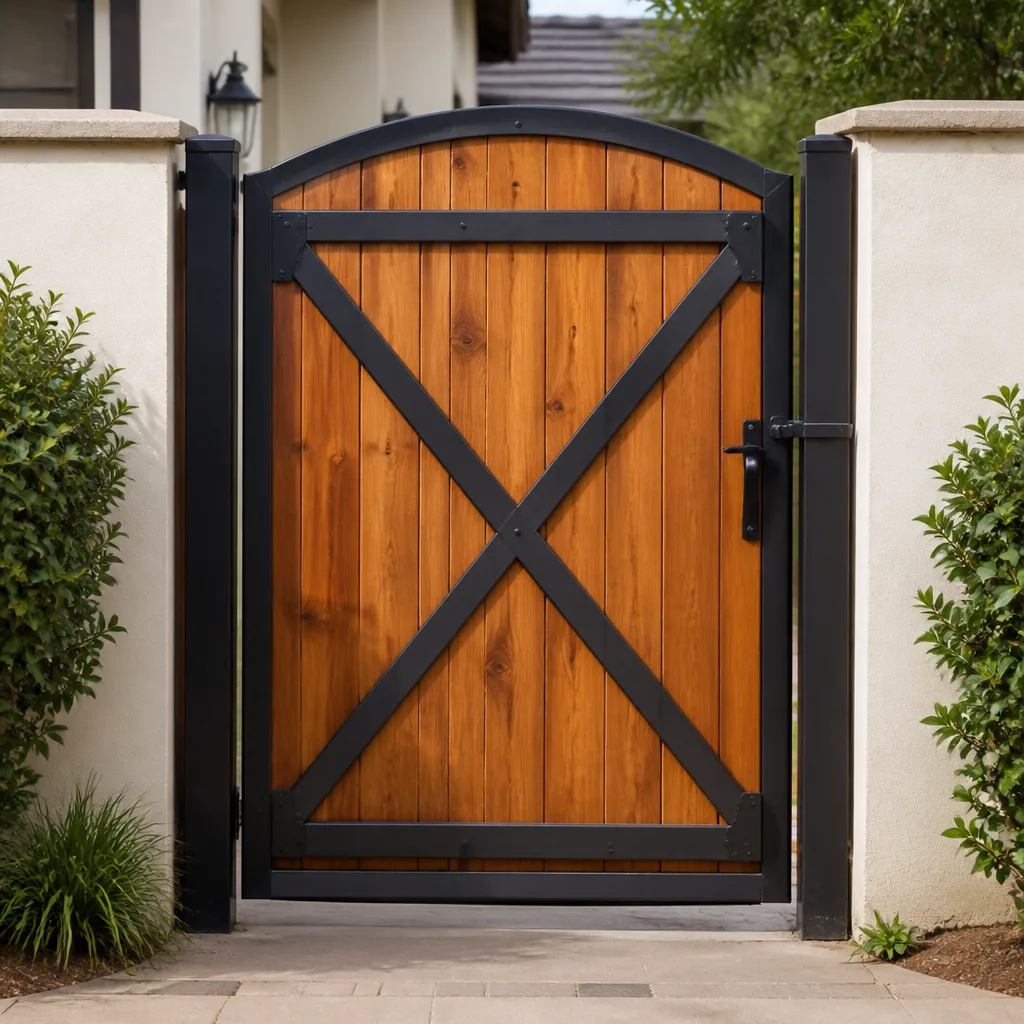 Wood & steel frame
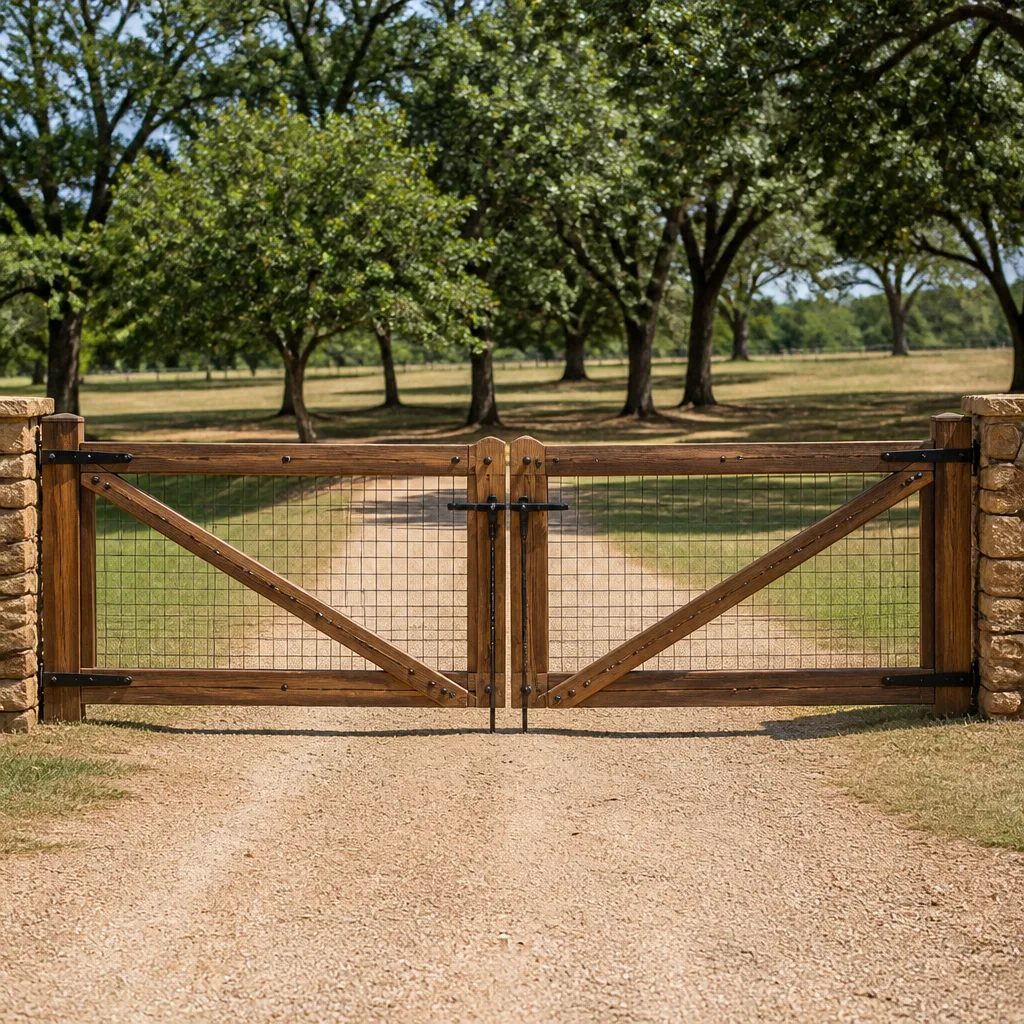 Farm & ranch
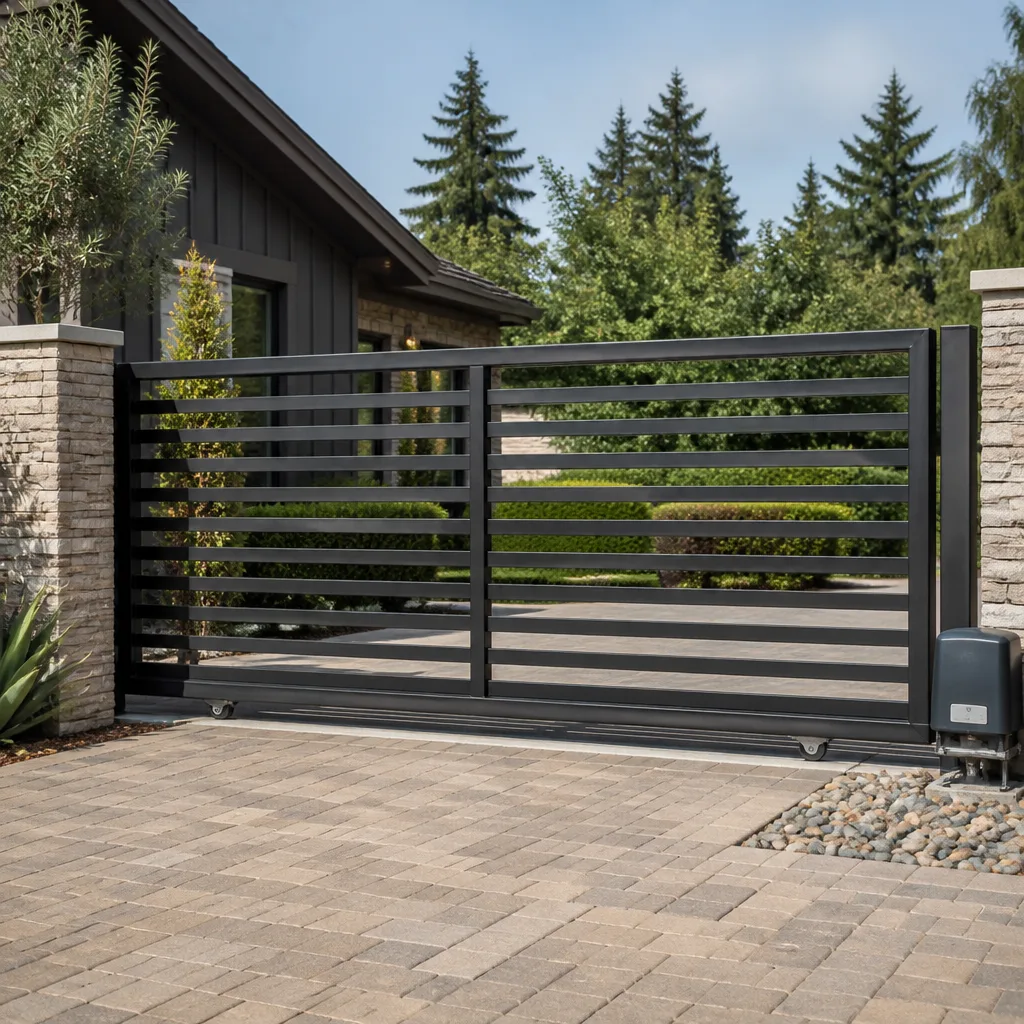 Sliding driveway gates
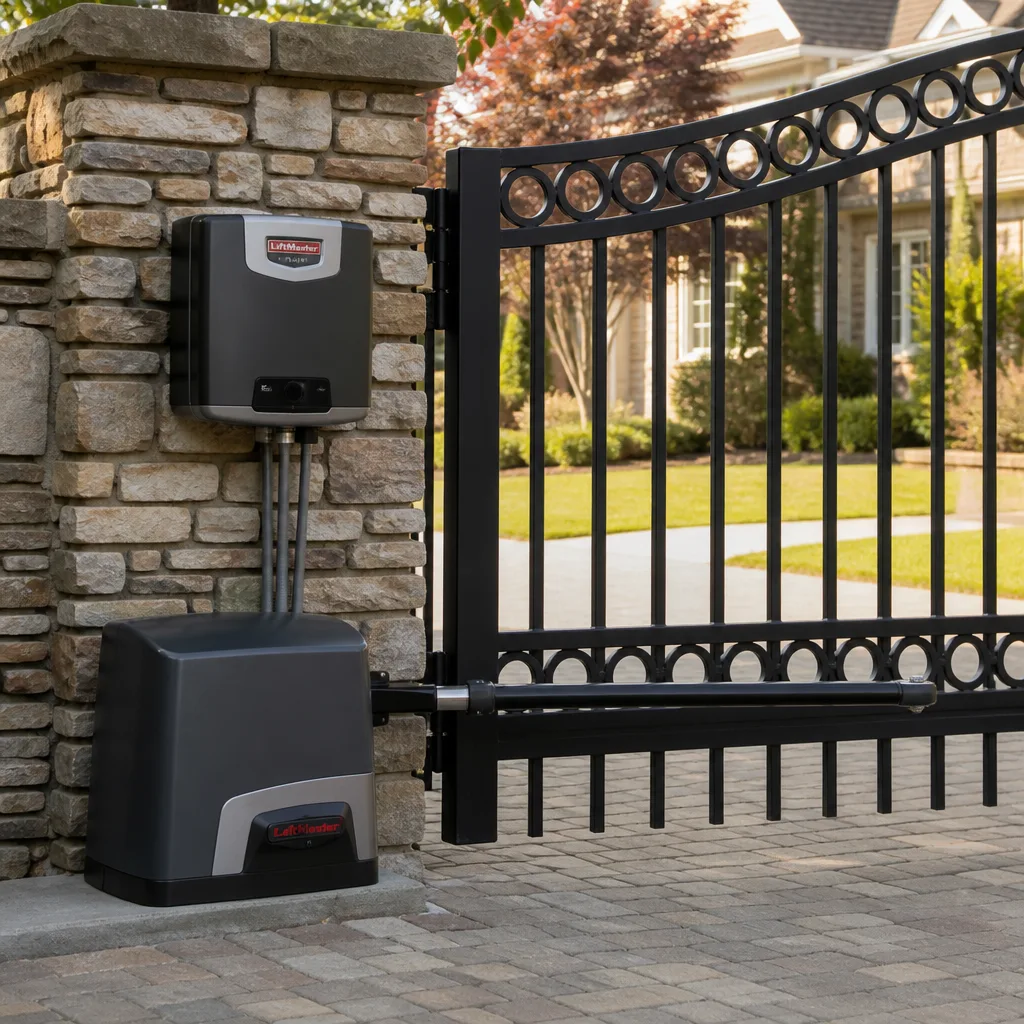 LiftMaster operators
Free on-site gate assessment - hinges, posts, and your LiftMaster or Nice gate operator checked before anything is quoted
The assessment is free and the quote is the invoice.
Get your free estimateGate Repair Cost Breakdown: The San Carlos Homeowner’s Reference for 2026
The labor rate on a gate repair quote tells you almost nothing. A $95 an hour technician who correctly diagnoses the problem and replaces one part is 60% cheaper than an $80 an hour technician who misdiagnoses the issue and swaps out three perfectly good components looking for the culprit. In San Carlos, where hillside properties meet a weird mix of 1960s ranch homes and newer estates, we see this pattern constantly. This guide gives you the actual 2026 cost benchmarks for our Gate Repair services by failure type, the brand-specific parts reality, the hidden fees most quotes omit, and the repair-versus-replace math so you can evaluate any quote with precision.
Styles & brands we work with
- Wrought iron
- Wood & steel frame
- Farm & ranch
- Sliding driveway gates
- LiftMaster operators
Quick Answer
For Gate Repair Maintenance Checklist for San Carlos Homeowners, gate repair in San Carlos in 2026 typically costs $185 to $950 depending on the failure type. Minor fixes like a misaligned sensor or a dead keypad battery run $85 to $185, while a failed control board on a residential swing gate runs $450 to $950. The biggest cost variable is the gate opener brand on your property: Mighty Mule and Ghost Controls parts are budget-friendly, while FAAC and BFT components legitimately cost 2 to 4 times more because they’re commercial-grade hardware engineered for heavier gates and higher daily cycle counts.
Table of Contents
- The Real Cost Structure: Labor vs. Parts on San Carlos Gate Repairs
- 10 Most Common Gate Repairs in San Carlos: 2026 Price Benchmarks
- Brand-Specific Parts Reality: Why FAAC Costs More Than Mighty Mule
- Hidden Cost Categories Most Quotes Omit
- Repair vs. Replace: The Cost-Per-Year Framework
- Red Flags in Low Quotes: What Cheap Bids Actually Cost You
- San Carlos-Specific Factors That Influence Gate Repair Pricing
- Common Mistakes to Avoid
- When to Call a Professional
- Frequently Asked Questions
- The Bottom Line
The Real Cost Structure: Labor vs. Parts on San Carlos Gate Repairs
Gate repair pricing in San Carlos follows a simple structure: you’re paying for the technician’s time, the parts they install, and a trip charge if the company applies one. What makes it confusing is that different companies package these differently. Some bundle the trip charge into the first hour of labor. Some show a low hourly rate but mark up parts 40 to 60 percent. Others quote cost-plus on parts with a higher labor rate to compensate.
Here’s what you should actually know. The going hourly rate for gate repair in San Carlos in 2026 runs from $85 to $135 an hour. Most residential repairs take 1 to 2.5 hours of billable time. Parts for common failures run from $18 for a limit switch to $400 for a replacement control board, depending on the brand. Trip charges in the Bay Area corridor from Redwood City to Belmont and down into San Carlos typically run $49 to $89, and a company that applies one usually credits it toward the repair if you approve the work.
The number that ultimately matters is the complete, signed, pre-work total. A $95 an hour tech who diagnoses the problem in 20 minutes and replaces a single $75 sensor costs $245. Wait, let me redo that math properly. That’s $95 for one hour of labor plus $75 for the part, plus perhaps a $49 trip charge, so $219 to $269 depending on trip fee structure. Compare that to an $80 an hour tech who spends two hours and replaces a control board, a sensor, and a capacitor at a marked-up parts cost of $540. That invoice lands at $700 plus. Same symptom, wildly different outcomes. The gap is diagnosis quality and parts honesty, not hourly rate.
We work on gates from electric gate opener systems in San Carlos every day and see these disparities constantly. The simplest way to protect yourself is to ask any company quoting a repair to identify the single component they believe is responsible for the failure before you approve the work. A confident, experienced technician will say, “It’s the control board. The relay isn’t closing.” A cautious generalist will say, “We’ll need to replace a few things and see if that fixes it.” That sentence is the tell.
10 Most Common Gate Repairs in San Carlos: 2026 Price Benchmarks
These numbers reflect what homeowners in San Carlos actually pay for gate repairs in 2026, based on standard residential swing and slide gates. Your specific quote will shift based on gate weight, opener age, access conditions, and brand, but these are the real ranges you should use to evaluate any bid.
1. Misaligned or Faulty Safety Sensor: $85 to $185
The photo eye or edge sensor tells the gate to stop or reverse if something is in its path. On San Carlos hillside driveways with angled approaches, these get knocked out of alignment constantly. Diagnosis takes 15 minutes. Replacement of a failed sensor takes 30 to 45 minutes. Parts run $28 to $65. This is the single most common repair we handle across existing automation systems.
2. Dead Keypad or Entry Keypad Not Working: $95 to $220
Keypads fail from weather exposure. San Carlos gets coastal fog cycling into dry heat, and the thermal swings kill keypad electronics within three to five years on average. A basic replacement keypad runs $45 to $90. A nicer backlit model runs $110 to $160. Labor is typically 30 to 45 minutes. You’ll pay more if the keypad needs to be integrated with an access control system rather than a standalone opener.
3. Gate Off Track or Binding: $150 to $380
Slide gates jump their track when the rail gets gummed up with decomposed granite from landscaping, or when wheels wear unevenly. Repairs involve cleaning the track, realigning the gate, and sometimes replacing worn roller wheels. Parts cost is negligible at $15 to $40, but labor runs 1.5 to 3 hours because you’re physically wrestling a several hundred pound gate. On heavy estate gates in the hills off Crestview Drive and the surrounding neighborhoods, the higher end of this range is normal.
4. Failed Gate Opener Capacitor: $120 to $210
A capacitor failure often shows up as a gate that hums but doesn’t move, or moves sluggishly. Capacitors are cheap: $18 to $45. The labor includes testing the motor’s current draw to confirm the capacitor is the problem and not a dying motor, which a proper diagnostic should always include. This is one of the repairs where honest diagnosis saves you hundreds: a capacitor plus a swap is under $220, while a motor replacement is $600 to $1,400.
5. Worn Gate Hinges on a Swing Gate: $160 to $480
Swing gates sag when hinge pins wear. The gate drops, scrapes the driveway, and eventually stresses the opener. This repair ranges from a simple pin replacement on a small pedestrian gate to full hinge replacement on a heavy 16-foot driveway gate. Parts are $25 to $180 depending on gate weight class. Labor is 1 to 2 hours. Ignoring a sagging hinge is the fastest way to turn a $200 repair into a $1,500 opener replacement.
6. Dead Remote or Receiver Failure: $75 to $150
If the keypad works but remotes don’t, the receiver or the remote itself is the culprit. A replacement remote is $35 to $65. A new receiver is $60 to $110. Often you can replace both and be done for under $150 all-in. The exception is when the receiver is integrated into the opener’s main board, at which point this becomes a board repair, not a remote repair.
7. Gate Opener Gear or Drive Failure: $275 to $650
Openers that use a chain or gear drive eventually strip. When the motor runs but the gate doesn’t move, or you hear grinding, the drive mechanism has failed. The gear kit itself costs $95 to $250. Labor is 1 to 2 hours depending on access and opener condition. On brand-name residential openers like Linear or Viking units, this repair is usually worth doing. We recommend it over replacement when the opener is under seven years old.
8. Failed Control Board: $450 to $950
The control board is the brain of the opener. When it fails, the gate may do nothing at all, or it may open but not close, or open and close on its own, which is as unsettling as it sounds. Board prices by brand run from $180 for a Mighty Mule residential board to $550 to $750 for a FAAC or BFT commercial-grade board. Labor is usually 1 to 1.5 hours including reconnection and testing of the safety loops. This is the second most expensive common repair, and it’s where the repair versus replace decision gets real, which we cover in detail below.
9. Loop Detector Failure: $250 to $550
Many San Carlos properties built in the 1980s and 1990s use in-ground loop detectors that sense vehicle presence. When the loop fails, the gate may not open as you approach, or it may not stay open while a vehicle is passing through. A new loop detector module runs $120 to $260. Sometimes the underground loop wire itself has broken, which requires either a new saw cut in the concrete or asphalt, driving labor up. You’ll see the higher end of this range when the loop itself needs to be replaced, not just the detector module.
10. Full Opener Replacement: $900 to $2,800
When the opener is beyond saving, a full replacement is the fix. On a standard residential swing gate, you’re looking at $900 to $1,600 including the opener and installation. For a heavy estate gate or one that requires a commercial-grade operator, the range shifts to $1,800 to $2,800. Brand choice drives a significant chunk of this spread, explained in the next section. For more detailed numbers on new systems, see our breakdown on gate installation in San Carlos.
Brand-Specific Parts Reality: Why FAAC Costs More Than Mighty Mule
The brand stamped on your gate opener is the single biggest driver of your repair parts cost. That’s not marketing, and it’s not a parts-selling scheme. It’s how the equipment is built.
Mighty Mule makes residential openers designed for light to medium gates with moderate use. A Mighty Mule control board costs $160 to $220. A replacement arm assembly runs $150 to $250. Their parts are widely available, and the opener itself is engineered to be consumer-friendly. For a single-family home in the flats of San Carlos with 10 to 20 open cycles a day, Mighty Mule does the job fine. But the components are simply not rated for the duty cycle a heavy gate demands.
FAAC and BFT manufacture what are effectively commercial-grade components sold into the residential market. Their hydraulic and electromechanical operators are built for gates weighing 600 to 2,000 pounds and running 50 to 200 cycles a day. A FAAC control board runs $450 to $750 depending on the model. A BFT board runs $380 to $650. The arms, motors, and gear assemblies similarly run 2 to 4 times the Mighty Mule equivalent. That premium buys you a longer service life, smoother operation on a heavy gate, and a lower likelihood of mid-life failure.
Lesser-known in the general market but spec’d on many Bay Area estates are Linear and Viking operators. Linear residential openers sit in the middle price band, with boards running $280 to $420. Viking operators lean commercial, with parts costs similar to FAAC. In our experience fixing gates across San Carlos gate repair jobs, these brand-price differences are consistent and non-negotiable at the parts level. A contractor quoting a FAAC board at $180 is either installing a counterfeit part, a salvaged pull, or eating a loss they’ll recover somewhere else in the invoice.
When is the premium worth paying? If your gate is heavy. If it runs more than 30 cycles a day. If you’re not interested in doing this repair again in three years. And if you have a long driveway where a failed opener means a genuinely annoying walk to the house. In those scenarios, maintaining the FAAC or BFT operator you already have is money well spent. Conversely, if you have a budget opener on a light 12-foot gate, you don’t need to upgrade to a commercial-grade part mid-repair. Match the part to the gate, not to the invoice.
Hidden Cost Categories Most Quotes Omit
An advertised hourly rate is not a quote. The final invoice includes categories the website or phone estimate never mentioned. Here are the ones that show up in San Carlos specifically.
Trip Charges and Diagnostics Fees
Most Bay Area gate companies charge $49 to $89 just to show up. Some credit it toward the repair; some don’t. Ask before you book. The phrase “free estimate” often applies to new installations, not to repair callouts, and that distinction is frequently lost in a phone call.
Rates
For Gate Repair Emergency Preparedness Guide for San Carlos Homes, a gate that fails at 10 p.m. or on a Sunday will cost more to fix right then. We quote the price before we start, whatever the day. That’s fair: you’re asking someone to leave their family on a weekend. Just know it’s coming before you approve the work. If the gate is open and you can secure it manually, waiting until Monday morning saves real money.
Parts Sourcing Delays and Expedited Shipping
Not every part for every brand sits in a truck in San Carlos. A specific BFT control board or a niche FAAC gear assembly may need to be ordered. If you need it fast, you’ll eat an expedited shipping charge, typically $25 to $60. Sometimes more for heavy components. A competent gate-only shop carries common boards and sensors in inventory, which is one of the reasons we maintain brand-specific parts stock for the operators we see most in this area.
Permit Requirements for Operator Replacements
San Carlos, like most of San Mateo County, doesn’t require a permit to repair an existing gate opener. But a full operator replacement, especially one that involves changes to the electrical feed or new concrete for a slide gate, can trigger a permit from the city’s building department if the work expands beyond a like-for-like swap. Nobody mentions this on a quote until it’s needed. It’s worth asking the question directly: does this job require a permit from the City of San Carlos, and who pulls it?
Concrete and Site Work
If your slide gate’s track is set in a failed concrete pad, or a new operator requires a new mounting pad, that’s concrete work, not gate work. Many gate contractors quietly subcontract this, and the invoice shows it. In San Carlos hillside conditions, a small pad can run $400 to $900. It’s not a scam; it’s just a line item that never appears on the first quote. Ask what the quote includes for site work before you sign.
Repair vs. Replace: The Cost-Per-Year Framework
The decision to repair or replace an existing opener comes down to a simple formula: what has the current opener cost you per year of service, and what will the repair cost add to that number? Here’s how to run the math.
- Find the opener’s age. Check the installation date on the opener itself or the original paperwork. If you don’t know, the model number often indicates the manufacturing year. An opener older than 10 years is at the end of its useful life for most residential brands.
- Add up every repair you’ve already paid for. Include parts, labor, trip charges, everything. Write down that total.
- Divide prior repair costs by years of service. That’s your cost-per-year of maintenance so far. A $600 repair on a 6-year-old opener means you’ve paid $100 a year in repairs.
- Add the cost of the current repair to the existing total and divide again. If a new $800 control board repair is needed on that same 6-year-old opener, your total repair spend jumps to $1,400 over 6 years, or about $233 a year.
- Compare that to the cost-per-year of a new opener. A $1,700 replacement that lasts 10 to 12 years costs $142 to $170 a year.
In that scenario, replacement is the better financial choice. The exact tipping point varies, but the rule of thumb is straightforward: when a repair costs more than 40 to 50 percent of the price of a new unit, and the existing unit is more than 7 years old, replacement should be on the table. When the repair is under 30 percent of replacement cost, fix it and keep moving.
This framework works for any brand. A FAAC operator that cost $2,600 to install eight years ago is likely worth a $600 repair, because it’s a robust unit with plenty of life. A Mighty Mule opener that cost $800 to install five years ago and now needs a $400 repair is a coin toss. Apply the math, not the emotion.
And a note on diagnosis: the repair-versus-replace decision is only as good as the diagnosis it’s based on. That’s why we run a full bench test on openers before recommending either path. A definitive component-level diagnosis costs you one service call. A wrong replacement recommendation costs you thousands.
Red Flags in Low Quotes: What Cheap Bids Actually Cost You
You’ll call three companies. Two quotes feel reasonable. One comes in substantially lower. It’s tempting. Here’s what that low quote usually hides.
- Substituted non-OEM parts. A generic control board in a FAAC opener is not the same as a FAAC board. Aftermarket boards have shorter service lives and fail in ways that are hard to trace. The quote says “control board replacement” without a part number. You’re getting a $120 generic board, not a $550 OEM board. The irony is you’ll pay for the real part anyway, in eight months, when the generic board cooks itself.
- No written warranty terms. A quote that doesn’t specify parts and labor warranty terms is a quote that includes no warranty. Period. Get it in writing: what’s covered, for how long. A 90-day parts and labor warranty is the standard. A company that won’t state it knows why they won’t.
- Vague scope language. “Address non-functioning gate opener” is not a scope of work. “Replace control board Part #790574, test all safety sensors, verify proper open and close limits, provide 90-day parts and labor warranty” is. If the quote doesn’t name the part, it’s not a quote. It’s a placeholder for whatever the final invoice says it should be.
- Excessive “just in case” parts. Some low-ballers quote low to get in the door, then discover “additional issues” once the gate is apart. You approved a $250 repair, and now the invoice is $850 because the tech found a bad capacitor and a worn gear and a flaky sensor. Each one plausible in isolation. The pattern is the tell. A competent diagnosis before the work starts doesn’t require disassembly for most common failures.
- No brand familiarity with your specific equipment. If the person quoting can’t name your opener brand and model without looking at a sticker, they’re guessing. A technician trained on your specific brand, whether it’s a Viking operator or a BFT unit, will identify the unit from two blocks away and likely know the failure mode before touching a screwdriver. We do this by working on these brands every single day.
San Carlos-Specific Factors That Influence Gate Repair Pricing
San Carlos isn’t a generic Bay Area suburb when it comes to gates. The city’s mix of flatland grid streets, steep hillside lots, and older custom homes means gate repair here has some idiosyncrasies you won’t see on a national pricing website.
Hillside Grade and Gate Weight
The properties in the hills above Alameda de las Pulgas, and the neighborhoods climbing up from Brittan Avenue toward Crestview, are built on slopes. Driveway gates set on grade have to work harder. Heavier gates, steeper grades, and the constant fight against gravity mean openers wear faster, hinges fail sooner, and safety sensors need more frequent adjustment. Every bit of this shows up in repair frequency and cost. A gate that lasts 12 years on a flat El Cerrito-adjacent lot might go 8 years on a hillside property before the opener gives out.
Coastal Fog and Electronics Corrosion
San Carlos sits right where Bay fog rolls over the hills from Half Moon Bay, and the moisture cycle, combined with afternoon sun and heat, shortens the life of control boards, keypads, and sensor wiring. We see corrosion on unprotected boards and connectors more often in San Carlos and Redwood Shores than in dryer inland communities. A weatherproof enclosure or a small heater inside a gate box is not an upsell; it’s cheap insurance on a $600 board.
Older Home Wiring
Homes in the Howard Park and White Oaks neighborhoods, many built in the 1940s, 1950s, and 1960s, often have older electrical panels and sometimes outdated wiring. When a gate opener fails, the root cause is occasionally not the opener at all but insufficient or degraded power at the point of the gate. We’ll test incoming voltage before pointing fingers at the control board. An electrician may be needed, and that’s a separate line item many quotes fail to mention until the opener is already pulled apart.
Access Conditions and On-Site Logistics
A slide gate that’s stuck in the closed position, on a hillside lot where the only access is the gate itself, creates a genuine problem. Technicians may need to disassemble the opener from the gate’s interior side or access the cabinet from an awkward angle. These conditions add labor time. The same repair on a flat lot with a friendly access point runs faster and cheaper.
Common Mistakes to Avoid
- Choosing a contractor by hourly rate alone. The lowest hourly rate often produces the highest total invoice because the diagnosis takes longer or the parts list is longer. Evaluate the complete quote, not the rate card.
- Ignoring a sagging gate or a grinding opener. These are early warning signs. Letting a hinge wear out fully or a gear strip completely turns a $200 fix into a $1,500 replacement. If your gate is making noise or sitting crooked, call before it stops entirely.
- Not asking if the technician is trained on your specific opener brand. Every brand has failure modes and quirks. A technician guessing on a FAAC hydraulic opener wastes hours, and hours are billable. Ask the question directly before booking.
- Approving work without a written, line-item quote. Verbal quotes for repairs are not binding in any useful way. A written scope with part numbers and warranty terms protects you from surprise line items and scope creep.
- Skipping preventive maintenance to save money. A $150 annual maintenance visit catches failing capacitors, worn gears, and loose connections before they become failures. Each of those prevented repairs individually costs more than the maintenance visit. On a gate that runs daily, it’s the cheapest repair you’ll ever buy.
- Treating all gate brands as interchangeable. A Mighty Mule part in a Viking opener is not a repair; it’s a hack. Using non-matching components creates failure chains that cost more to untangle than the original repair would have cost.
- Forgetting that San Carlos hillside gates work harder. If your property is on a grade, your maintenance schedule should be more aggressive than the manufacturer’s recommendation. The duty cycle on a slope is higher, and so is the wear.
When to Call a Professional
Call a gate specialist when the gate won’t move at all, when it moves erratically or reverses at random, when the opener grinds or hums without moving the gate, when a safety sensor won’t hold alignment, or when the gate behaves normally one day and not the next. Intermittent failures are the hardest to diagnose correctly, and they’re the ones where a generalist will start replacing parts on a hunch. Some gate work is genuinely dangerous: a gate under tension, a heavy slide gate off its track, and any opener with high-voltage connections all deserve a trained eye and the right tools rather than a weekend attempt. Gate Repair San Carlos offers free estimates in San Carlos, call (855) 395-1573. We’ll give you a diagnosis and a written quote before any work begins.
Frequently Asked Questions
Gate repair in San Carlos costs $185 to $950 for most common repairs in 2026, with small fixes like keypad replacements at the low end and control board replacements at the high end. The brand of your opener is the biggest variable. Call (855) 395-1573 for an exact quote, and we’ll tell you the diagnosed problem and the parts cost before you commit.
Common repairs like a misaligned sensor, a failed keypad, or a dead remote are often completed the same day when we have the part on the truck. Control board replacements may require a day for parts sourcing depending on your opener brand. Call us at (855) 395-1573 and we’ll tell you if we can get to you today.
FAAC parts cost 2 to 4 times more than Mighty Mule parts because FAAC builds commercial-grade operators rated for heavier gates and higher cycle counts. An OEM FAAC control board runs $450 to $750, while a Mighty Mule board runs $160 to $220. The higher price buys a longer service life, not markup.
We work on nine major gate opener brands including LiftMaster, FAAC, BFT, Linear, Viking, Ghost Controls, DoorKing, Elite, and Mighty Mule. That covers the vast majority of residential and commercial gate systems installed in San Carlos. We fix the brand you have, not the brand we sell.
Use the 40 to 50 percent rule: if the repair costs more than 40 to 50 percent of a new unit, and the opener is over 7 years old, replacement is usually the better financial choice. If the repair is under 30 percent of replacement cost, fix it. Apply the cost-per-year framework in this guide to calculate your exact tipping point.
Yes, we provide free estimates on new gate installations and written quotes on repairs. Every repair quote includes the specific part, the line-item price, and warranty terms before any work starts. Call (855) 395-1573 to book.
The Bottom Line
Gate repair pricing in San Carlos varies more than it should, and the difference between a fair quote and a bad one isn’t the hourly rate. It’s the quality of the diagnosis, the honesty of parts sourcing, and the completeness of the written scope. Know your opener’s brand. Know what its parts actually cost. Ask for a named component, a line-item quote, and a warranty in writing before you approve anything. If you have a gate that’s acting up or won’t move, call a specialist that works on your brand. Gate Repair San Carlos can be reached at (855) 395-1573.
Written by the team at Gate Repair San Carlos, serving San Carlos since 2017. Check out more guides & resources.
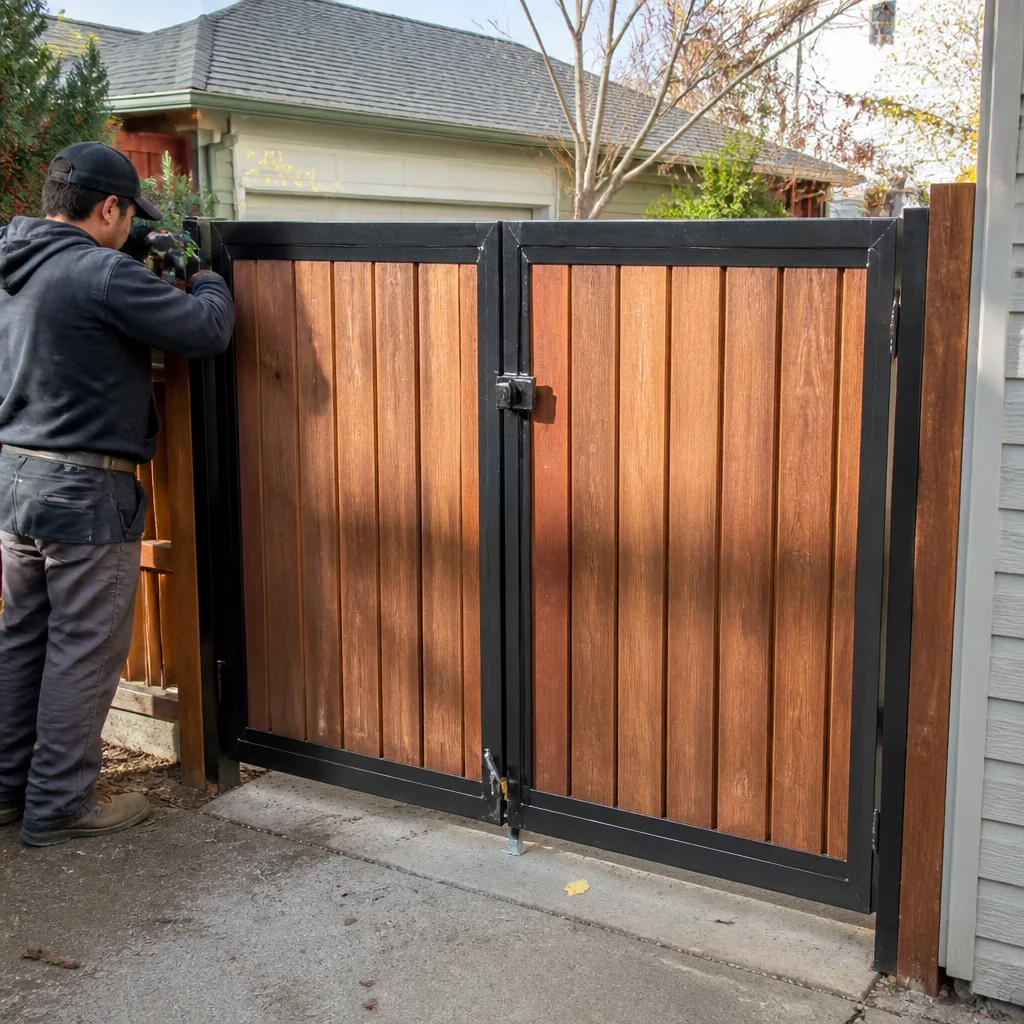
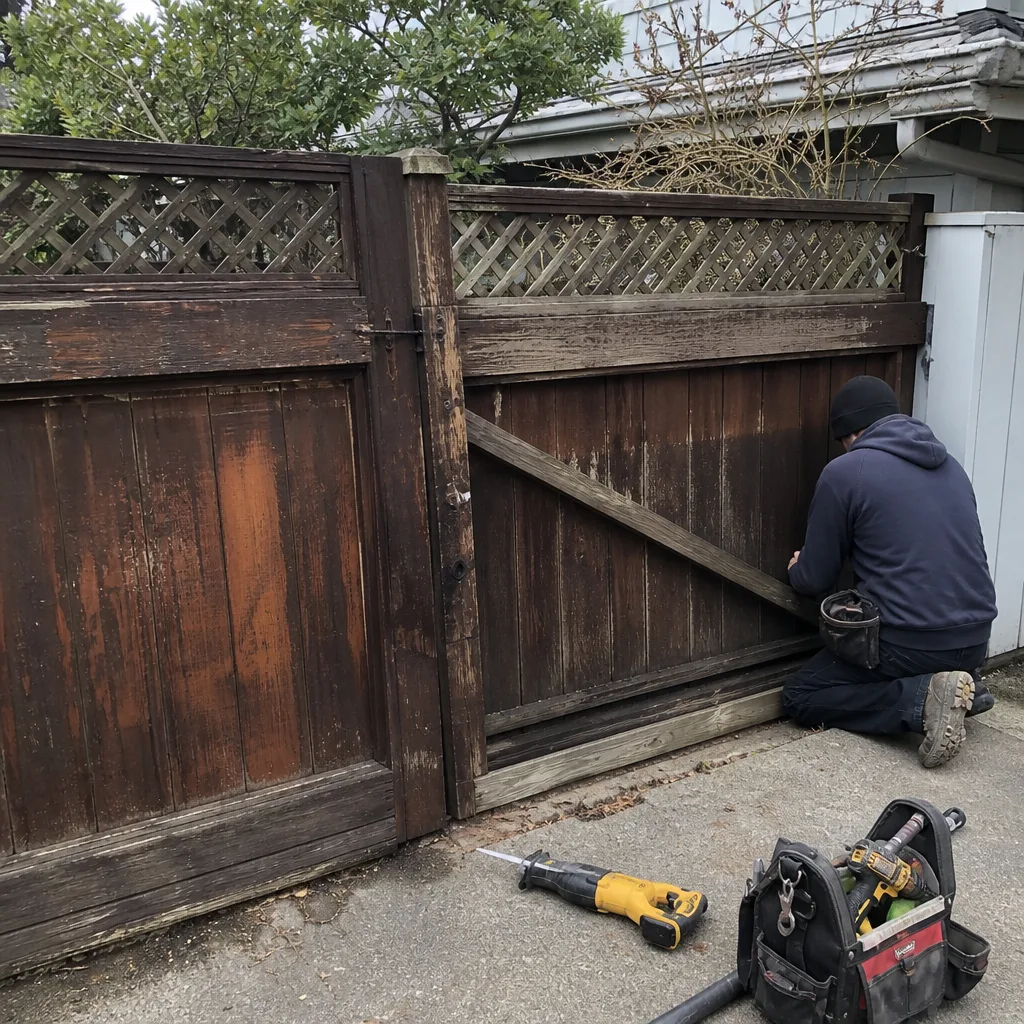
See the difference
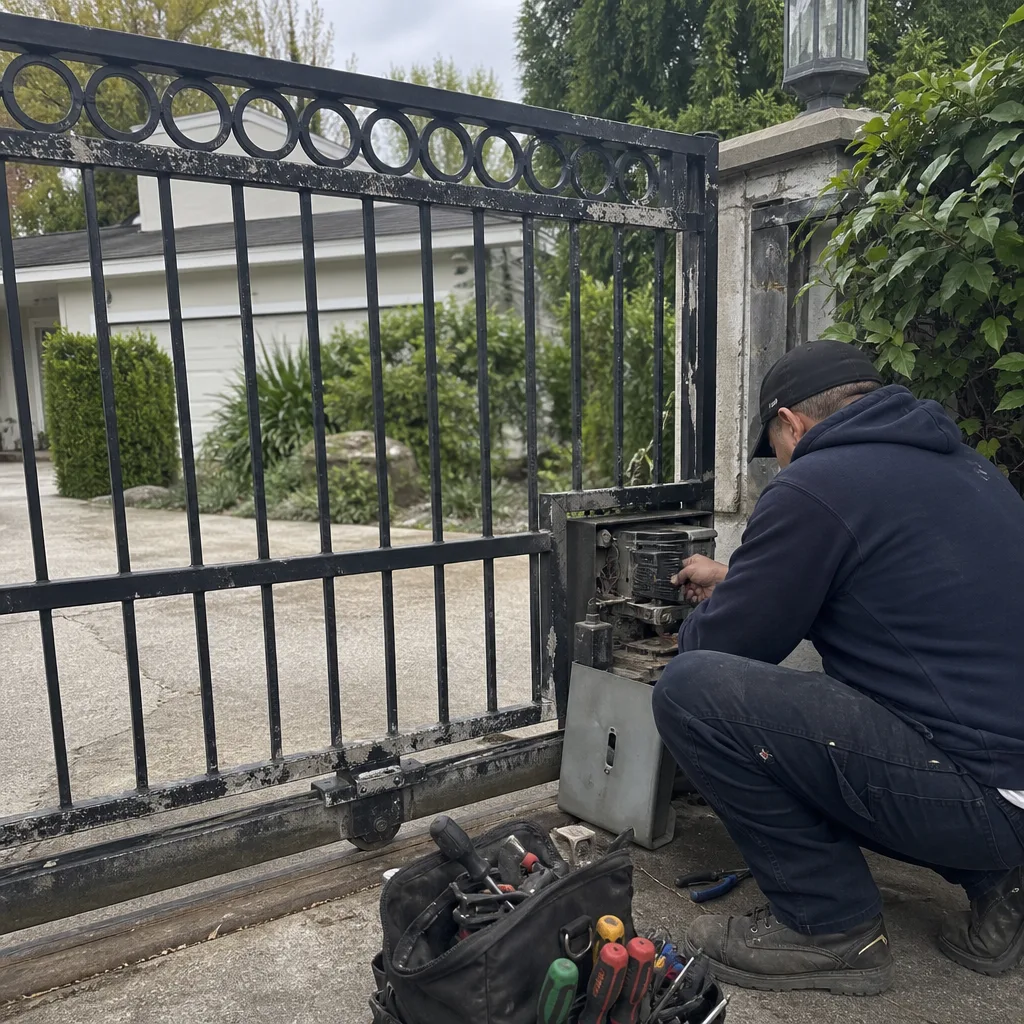 Before
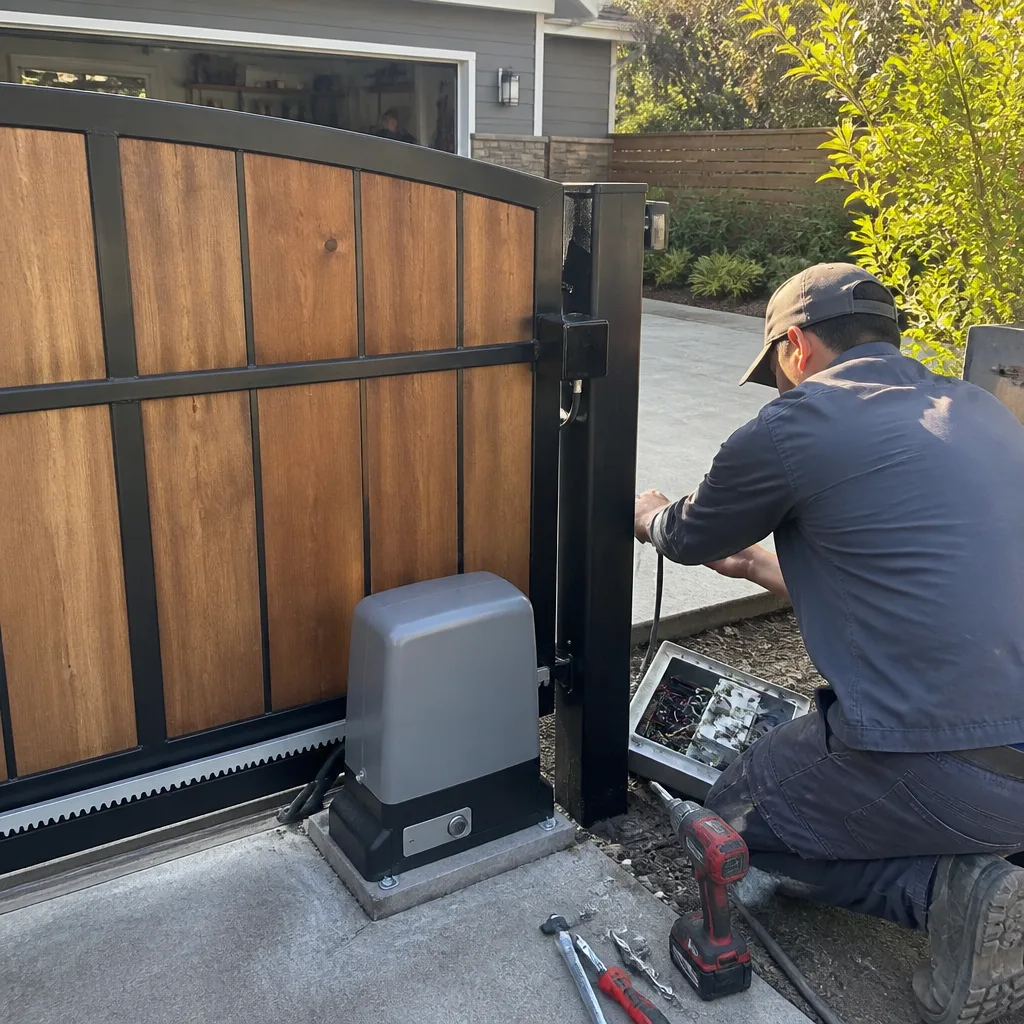 After
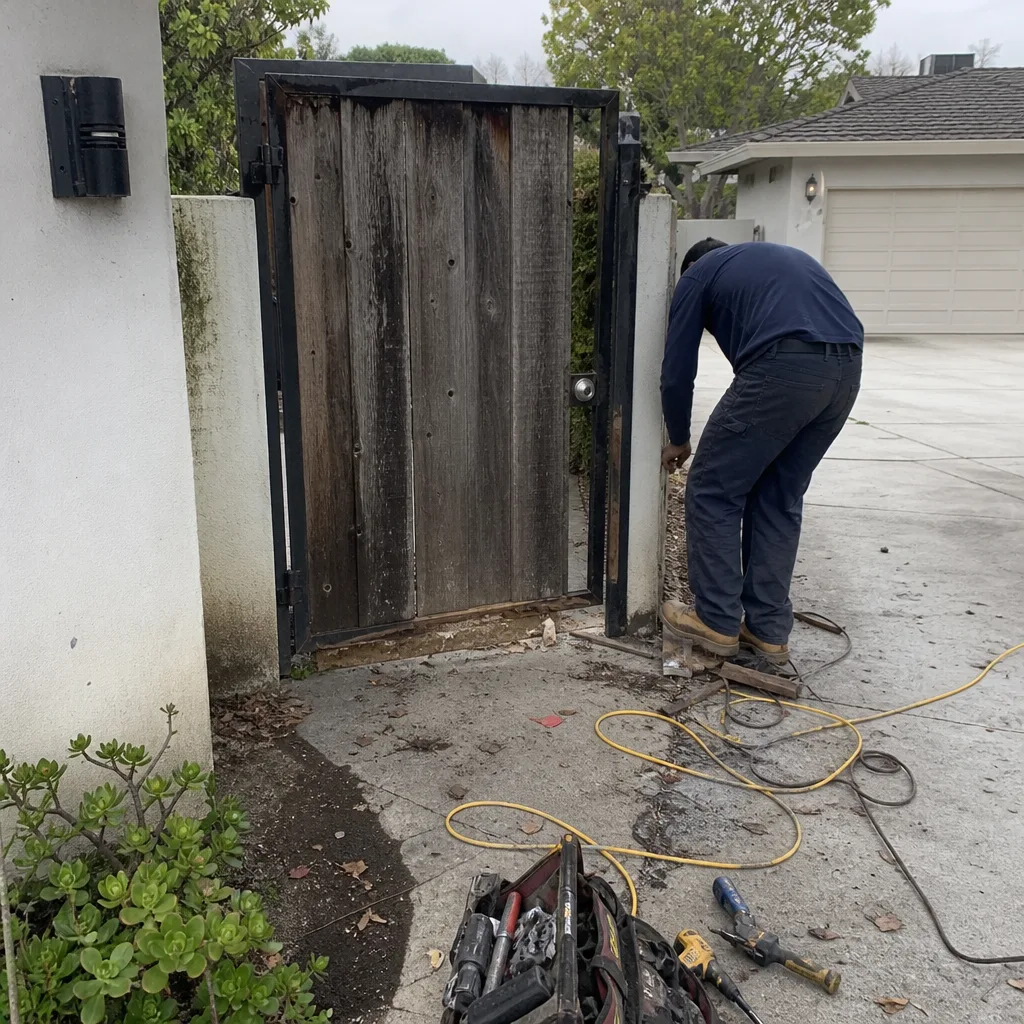 Before
 After
 Before
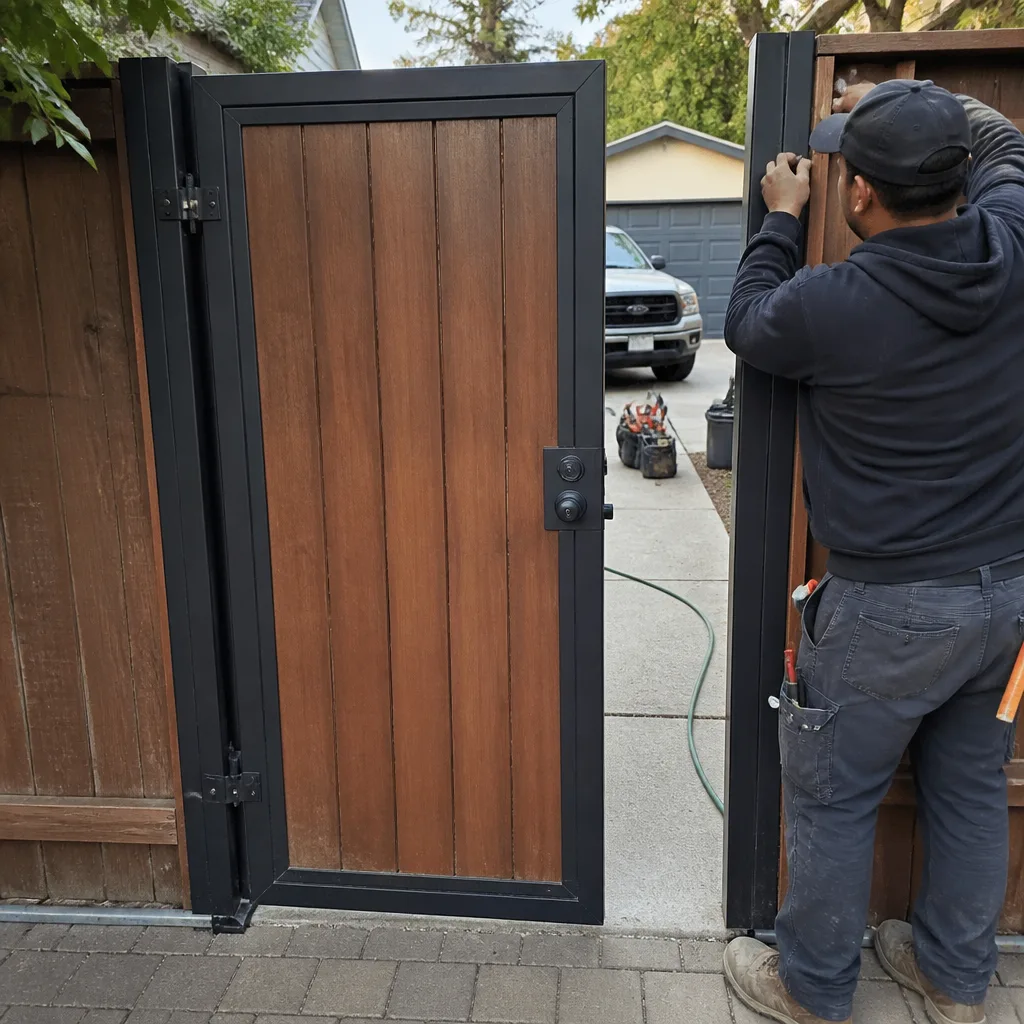 After